Introduction
What Are VR Hotel Tours?
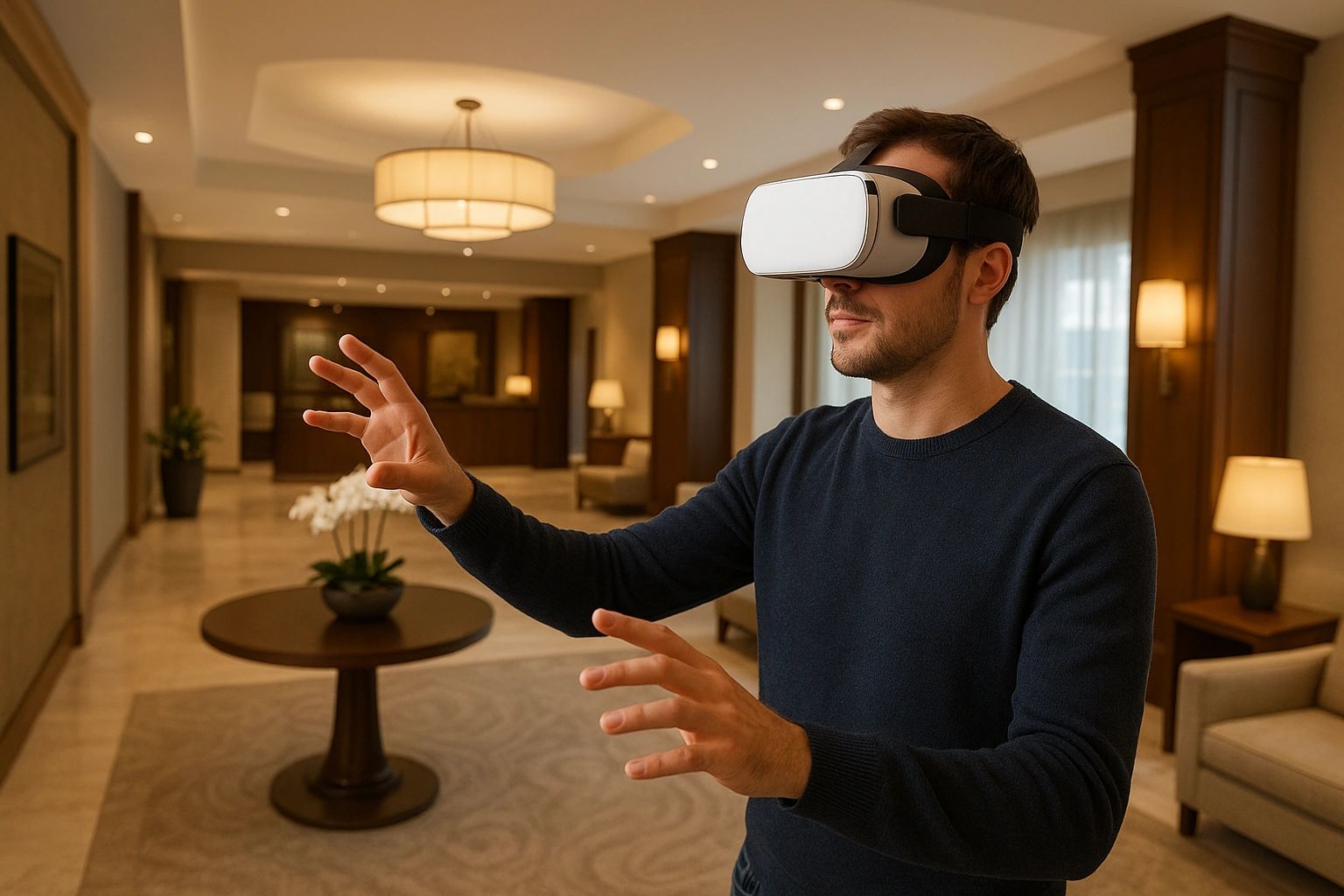
In 2025, providing this level of transparency is becoming a competitive necessity. A report from WIRED on immersive technologies highlights that consumers are increasingly expecting interactive digital experiences. The future of **VR booking tools** involves integrating the “Book Now” button directly within the virtual tour, allowing a guest to select a specific room while “standing” inside it, creating a seamless path from exploration to conversion.
Why VR Tours Are a Must-Have for Modern Hotels
Set Realistic Expectations and Increase Guest Satisfaction
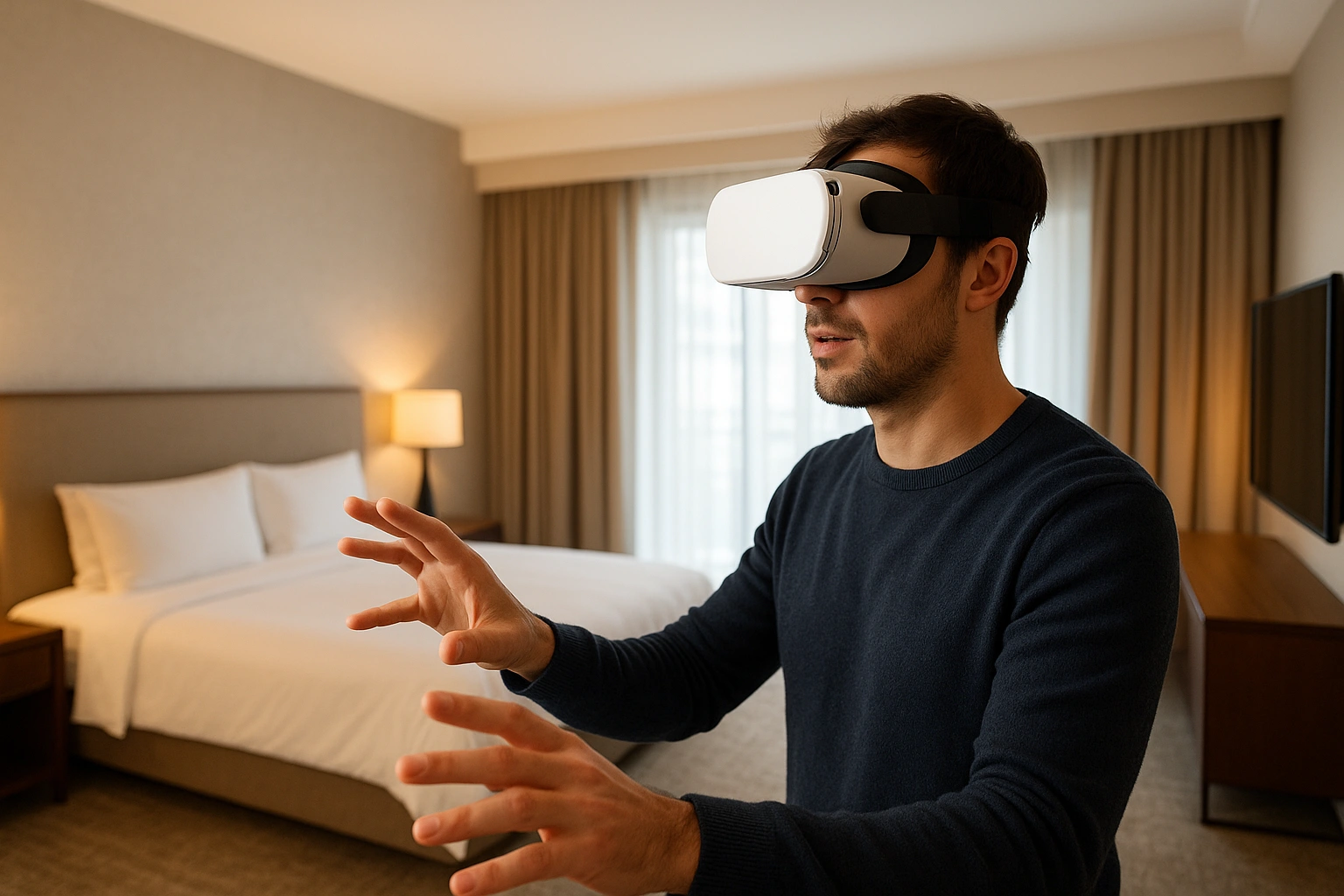
The number one cause of a negative hotel review is a mismatch between what was advertised and the reality. A virtual tour provides a transparent, “what you see is what you get” preview, ensuring guests arrive with accurate expectations.
- Example: A traveler can see the exact size of a standard room and its view, eliminating any potential disappointment upon arrival.
- Benefit: Leads to higher guest satisfaction scores, better online reviews, and repeat business.
Boost Direct Bookings and Reduce OTA Fees
An engaging, high-quality virtual tour on your own website gives customers a compelling reason to book directly with you, rather than through an Online Travel Agency (OTA) that takes a hefty commission.
- Example: A guest explores the hotel in VR on your site and uses an integrated **VR booking tool** to reserve their room immediately.
- Benefit: Increases direct booking revenue and gives you ownership of the customer relationship.
Supercharge Event and Wedding Sales
For event planners and wedding couples, being able to visualize a space is critical. A virtual hotel walkthrough allows them to tour your ballroom, conference rooms, and outdoor spaces remotely, saving them a site visit and accelerating the sales cycle.
- Example: An international event planner can measure a conference room and plan their layout using a VR tour from the other side of the world. This is a business application similar to the cultural exploration found in virtual museum tours.
- Benefit: Dramatically expands your reach for MICE (Meetings, Incentives, Conferences, and Exhibitions) and wedding business.
The Technology Behind a Virtual Hotel Walkthrough
Creating a high-quality virtual tour has become a streamlined process thanks to specialized platforms.
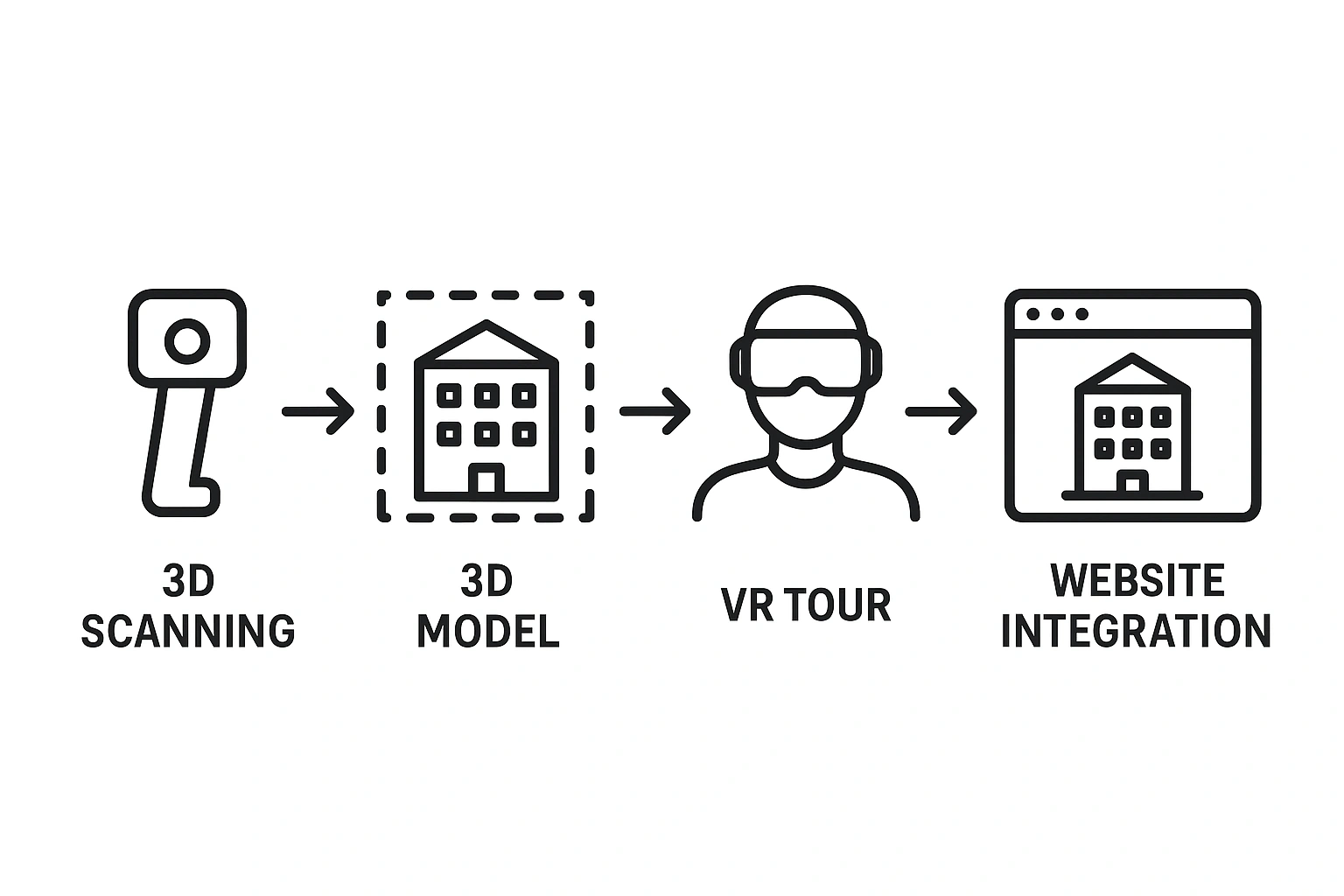
- 3D Scanning: A photographer uses a specialized 360° camera (like one from Matterport) to scan each room and space in the hotel. The camera captures both visual and depth data.
- Cloud Processing: The captured data is uploaded to a cloud platform, which uses AI to automatically stitch the scans together into a seamless, walkable 3D model of the property.
- Enrichment and Publishing: Within the platform’s editor, you can add “mattertags”—interactive pop-ups with text, photos, videos, or links. You can also add a “Book Now” CTA.
- Website Integration: The finished tour is embedded directly into your hotel’s website with a simple line of code, making it instantly accessible to potential guests.
Case Study: Matterport in Hospitality
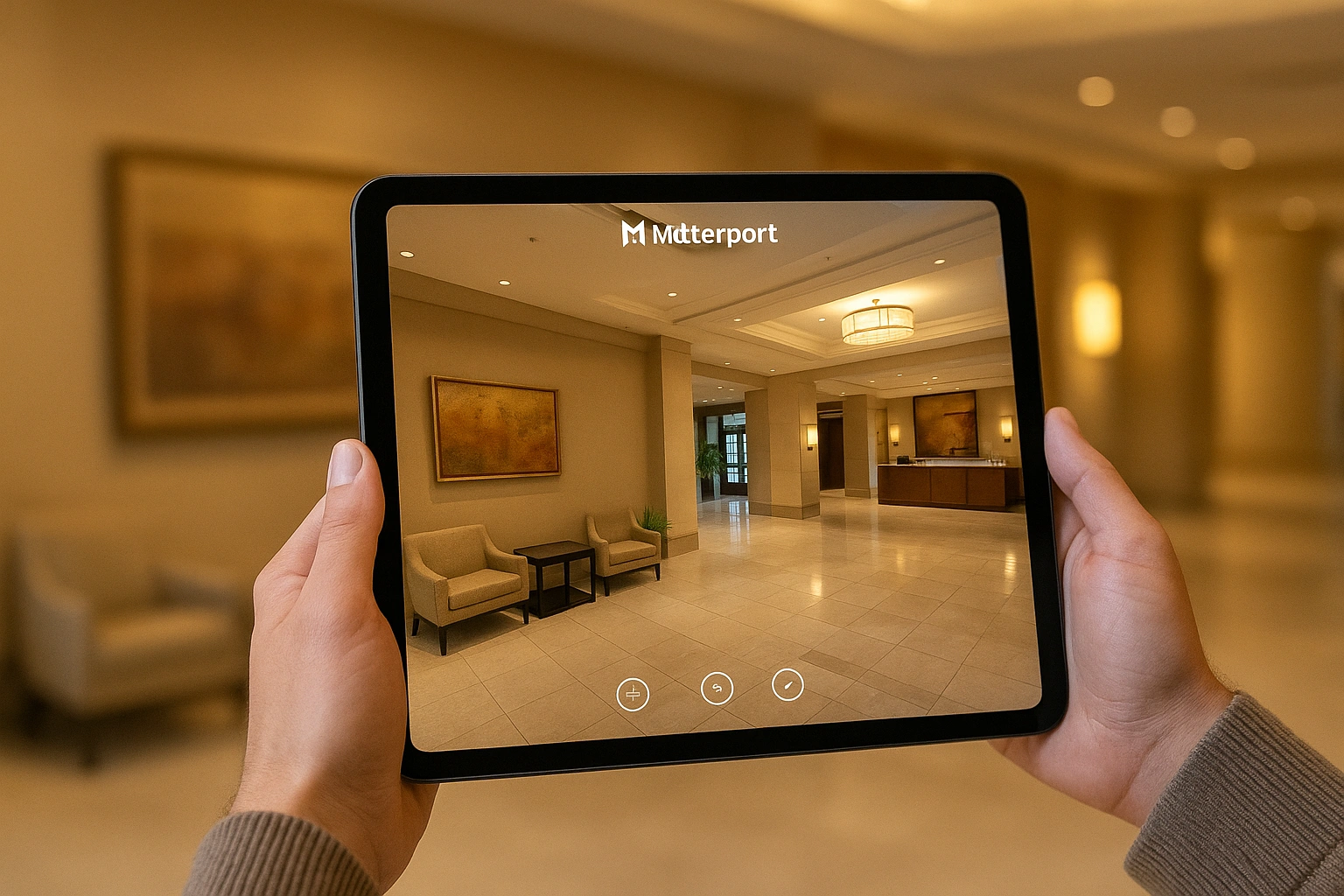
**Matterport** is the undisputed leader in creating 3D virtual tours for real estate and hospitality. Their technology is used by major hotel chains like Marriott and Hilton to create consistent, high-quality **virtual hotel walkthroughs** across their portfolios.
The user experience is incredibly intuitive. A guest can navigate the 3D space using their mouse or finger, switch to a “dollhouse” view to see the entire property layout, or use a measurement tool to check dimensions. The quality is photorealistic, and the ability to add interactive tags allows hotels to upsell services—for example, a tag on the spa entrance could link to the treatment menu and booking page.
Pros & Cons of Using a Platform like Matterport
| Pros | Cons |
|---|---|
| ✅ Creates stunning, photorealistic, and easy-to-navigate tours | ❌ Requires hiring a certified photographer or buying expensive hardware |
| ✅ Industry standard, trusted by travelers and planners | ❌ Involves an ongoing monthly hosting fee for the tours |
| ✅ Simple to embed and share | ❌ Less customizable than a fully bespoke VR app |
Comparison of Virtual Tour Technologies
Hotels have several options when it comes to creating immersive tours.
| Technology | Description | Pros | Cons | Best For |
|---|---|---|---|---|
| Matterport 3D Tour | Walkable 3D space created from 360° scans. | High quality, easy navigation, interactive tags | Ongoing cost | Most hotels looking for a professional, reliable, and high-impact solution. |
| Simple 360° Photos | A gallery of individual spherical photos of each room. | Cheap and easy to produce | Not a seamless walkthrough, less immersive | Budget hotels or B&Bs wanting a basic virtual presence. |
| Custom VR App | A fully bespoke, interactive VR application. | Highly customizable, can include gamification | Extremely expensive, requires app download | Luxury resorts or large chains wanting a flagship marketing piece. |
Common Mistakes to Avoid
To get the best ROI from your VR tour, avoid these mistakes:
- Scanning a Messy Room: The hotel must look its absolute best during the scan. It’s a permanent digital record.
- Hiding the Tour: Don’t bury the link. Feature it prominently on your homepage and room pages.
- Forgetting the Call-to-Action: Not adding a “Book Now” link inside the tour is a massive missed opportunity.
- Letting it Get Stale: If you renovate your lobby, you must rescan it to keep the tour accurate.
Expert Tips & Best Practices
Follow these tips from hospitality marketing experts:
- Create a “Highlight Reel”: Most platforms let you create a guided tour that automatically takes the user to the best features.
- Use it in Your Email Marketing: Send the tour to your mailing list to re-engage past guests or entice potential new ones.
- Equip Your Sales Team: Your sales staff should have the tour on a tablet to show event planners during sales calls.
“A virtual hotel walkthrough is the most powerful tool of transparency a hotel has. In an age of filtered photos and misleading descriptions, showing your property exactly as it is builds an incredible amount of trust. And trust is what turns a looker into a booker.”
Frequently Asked Questions (FAQ)
Q: How long does it take to create a VR hotel tour?
A: The on-site scanning for an average-sized hotel can typically be completed in one day. The processing and publishing on a platform like Matterport usually takes another 24-48 hours.
Q: Can VR booking tools integrate with my existing reservation system?
A: While direct integration is complex, the most common method is to have the “Book Now” tags in the tour link directly to the correct page on your existing online booking engine.
Q: What is the average cost of a virtual hotel walkthrough?
A: The cost is typically based on the square footage of the property. For a professional Matterport scan, you can expect to pay a few hundred to a few thousand dollars, plus a monthly hosting fee.
Conclusion
In the competitive world of hospitality, providing an exceptional customer experience starts long before the guest arrives. **VR hotel tours** are a powerful tool to build trust, answer questions, and create a seamless path to purchase. By embracing **immersive hospitality**, you can give potential guests the confidence they need to click “Book Now.” As you explore this technology, stay informed on the latest digital trends by following publications like Google VR.