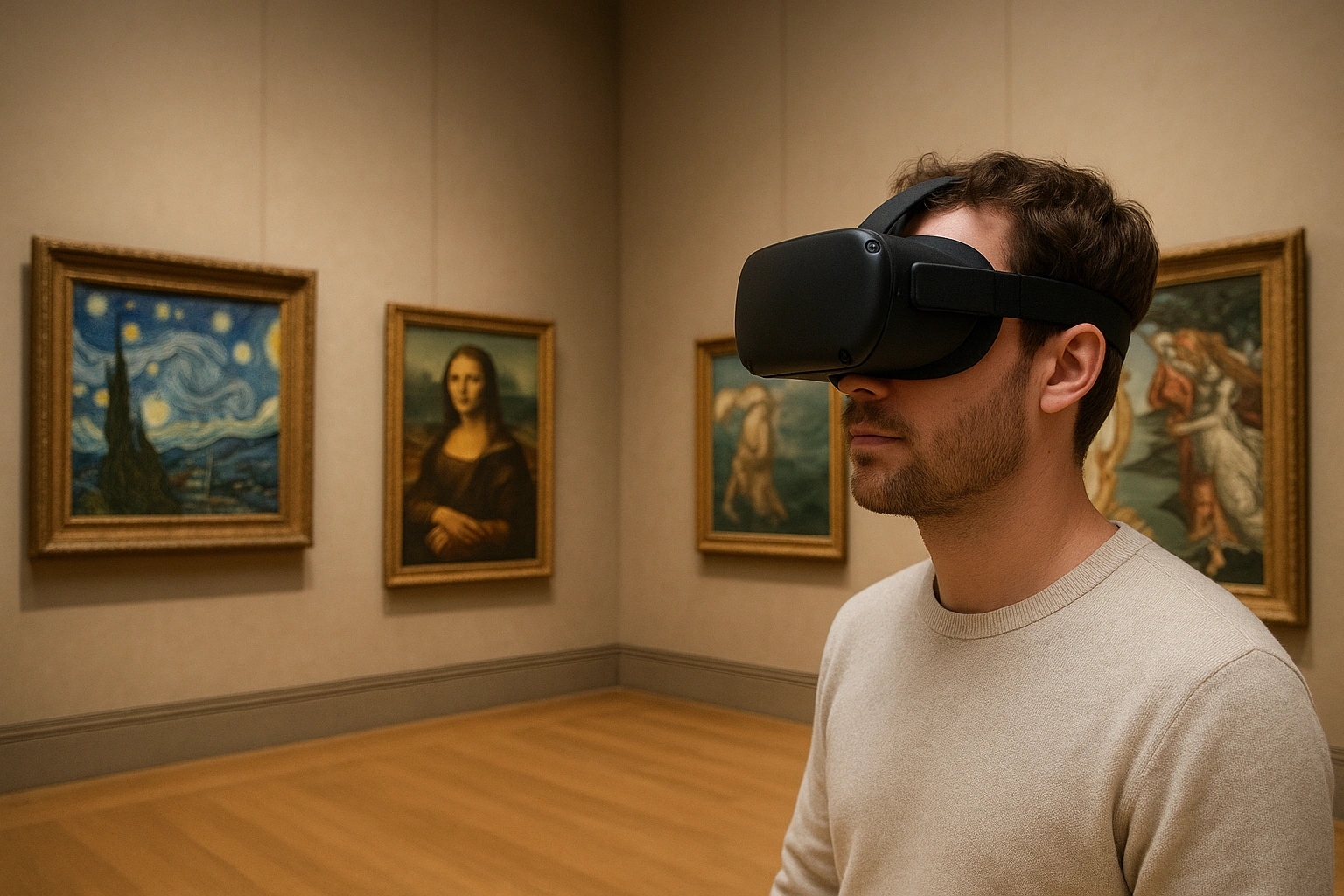
Discover the best virtual museum tours of 2025 and experience art and history like never before. This guide explores immersive VR museum journeys and online cultural tours, showcasing the top virtual museum tours that let you explore famous landmarks from home. Whether you’re a history buff or an art lover, these virtual museum tours provide engaging and educational VR heritage experiences. By the end, you’ll know which virtual museum tours offer the most realistic and awe-inspiring ways to experience culture in 2025.
Introduction
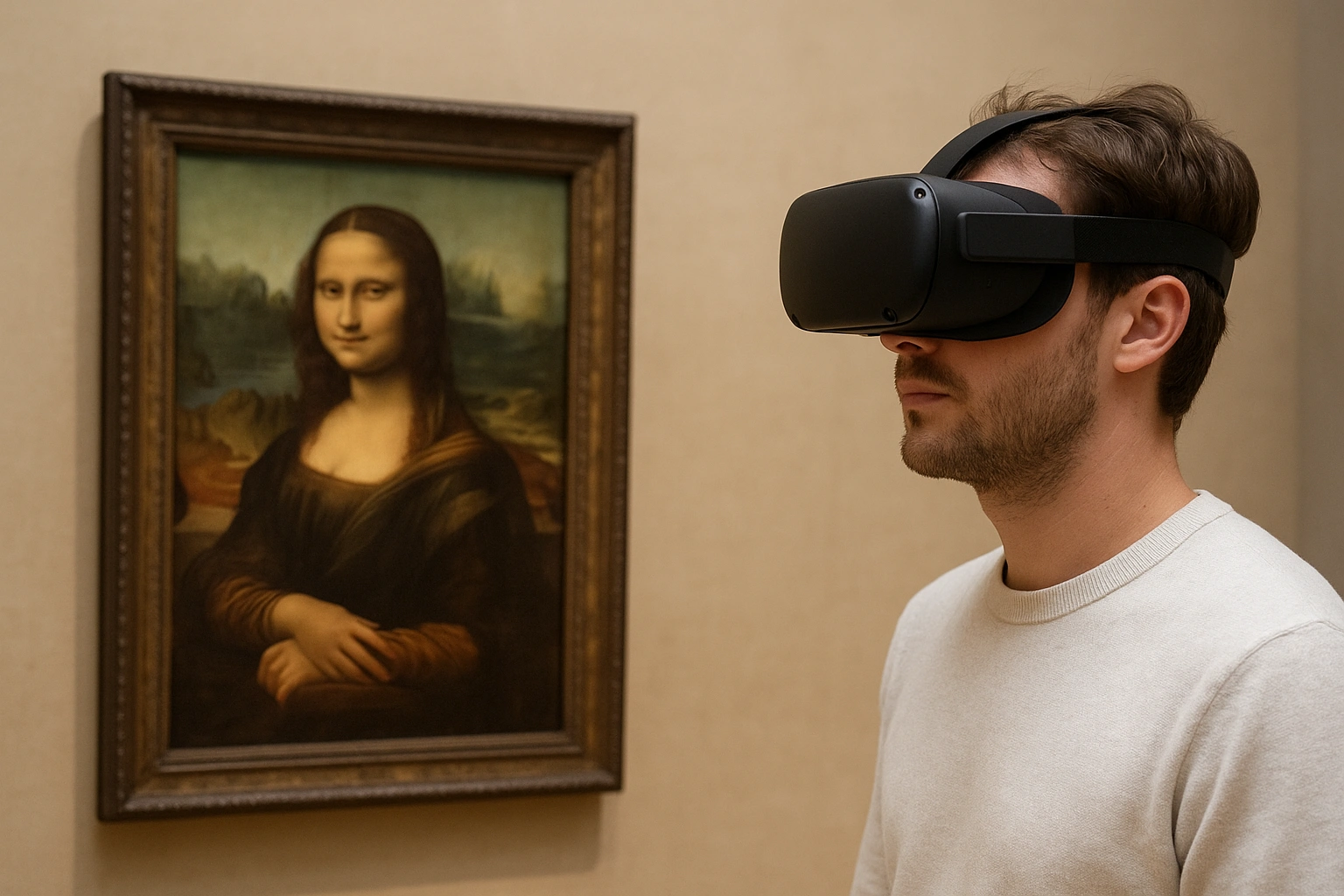
Imagine getting a private, after-hours experience at the Louvre, exploring the Mona Lisa without the crowds. Or walking through the ancient city of Pompeii as it looked moments before the eruption. Thanks to virtual museum tours, this is now possible. This guide will take you through the world’s most incredible collections with top virtual museum tours, showing how VR brings history and art to life. By the end, you’ll know which immersive cultural VR tours and virtual museum tours offer the most engaging ways to explore heritage from home.
What Are Virtual Museum Tours?
Virtual museum tours offer immersive digital experiences, letting users explore museums, galleries, and heritage sites from anywhere in the world. With VR headsets or web browsers, participants can navigate photorealistic 3D spaces, view detailed scans of artifacts, and follow guided audio narratives. These online museum adventures, part of the broader world of virtual museum tours, range from simple 360° photo galleries to fully interactive VR heritage experiences. For those seeking deeper engagement, advanced virtual museum tours let you ‘walk’ through historic locations as if you were physically there.
The cultural sector has embraced this technology enthusiastically. A report from the American Alliance of Museums notes a significant increase in digital engagement post-2020. The future trend is toward interactive and educational layers, where users can not only see an artifact but also watch a video of its creation, learn about its historical context, or even participate in a virtual restoration project.
Why Virtual Access to Culture Matters
Digital access to cultural heritage offers profound benefits for society.
Democratize Access to Knowledge
Not everyone can afford a trip to Paris or Cairo. Virtual tours remove geographical and financial barriers, making world culture accessible to a global audience, including students and individuals with disabilities.
- Example: A student in a rural classroom can take a guided tour of the British Museum’s Egyptian collection for a history lesson.
- Benefit: Fosters global citizenship and provides equitable educational opportunities.
Preserve Fragile Heritage Sites
Many historical sites are threatened by climate change, conflict, or over-tourism. Creating a high-fidelity digital twin is a vital act of preservation, ensuring that these places can be experienced by future generations, even if the physical site is damaged or lost.
- Example: A team of digital archivists creates a detailed photogrammetry model of a crumbling ancient temple.
- Benefit: Creates a permanent digital record of our shared human history for study and appreciation.
Create New Forms of Storytelling
VR allows curators to tell stories in ways that are impossible in a physical gallery. They can reconstruct historical environments, show artifacts in their original context, or create interactive narratives.
- Example: A VR heritage experience allows you to see the Parthenon not as it is today, but as it was in ancient Greece, complete with its vibrant colors and sculptures. This is a different way of exploring than with general virtual tourism apps.
- Benefit: Offers a deeper, more contextual understanding of art and history, moving beyond the static display case.
The Technology Behind Cultural VR Tours
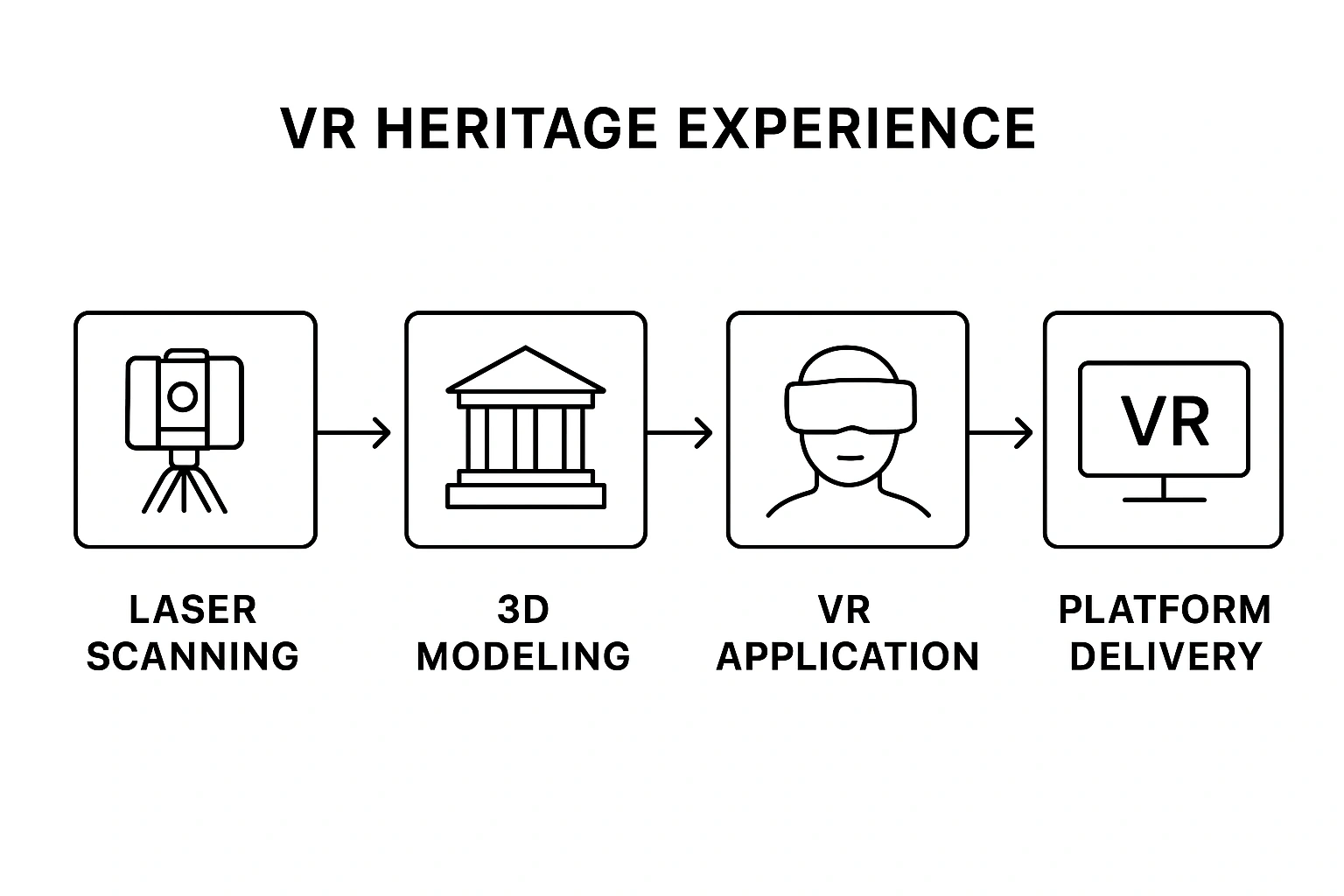
Digitizing a museum or heritage site is a complex process that combines several cutting-edge technologies.
- Laser Scanning (LiDAR): For architectural spaces, laser scanners are used to capture millions of data points, creating a geometrically perfect 3D “point cloud” of the environment.
- Photogrammetry: High-resolution photos are taken of every surface and artifact. Software then analyzes these photos to create realistic, textured 3D models.
- Game Engine Integration: The 3D models and scans are imported into a game engine like Unreal Engine or Unity. This is where interactivity, lighting, and audio guides are added.
- Platform Delivery: The final experience is packaged and delivered either as a downloadable app for VR headsets or optimized for streaming on the web via platforms like Sketchfab or Matterport.
Experience Spotlight: “Mona Lisa: Beyond the Glass”
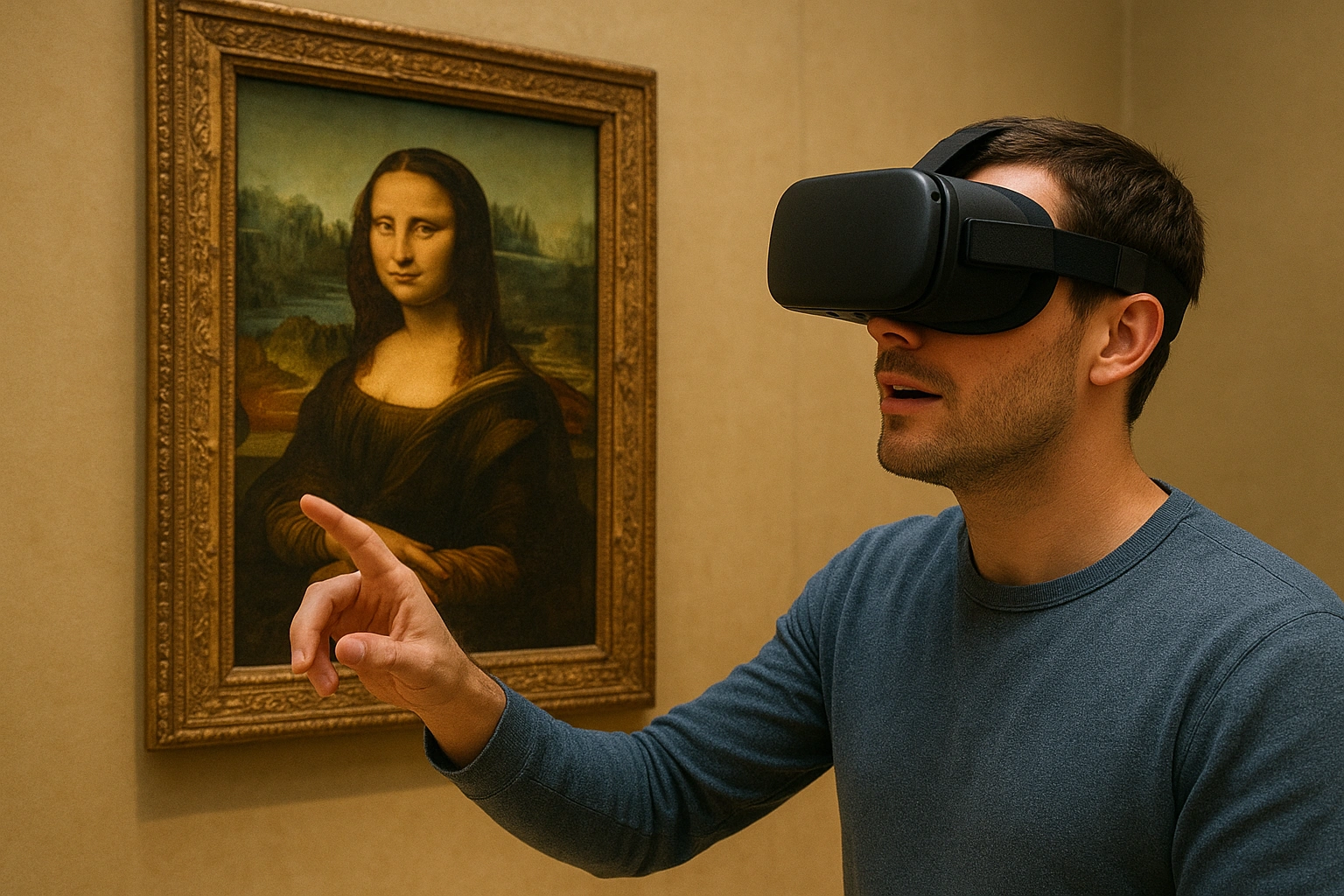
The Louvre’s first-ever VR experience, **”Mona Lisa: Beyond the Glass,”** is a landmark example of a **virtual museum tour**. Created in partnership with HTC VIVE Arts, it finally gives the public an intimate encounter with the world’s most famous painting.
In the experience, you are transported to the Salle des États, but the crowds are gone. You can step right up to the painting, seeing the fine details of the poplar panel and the delicate craquelure of the varnish. But the magic happens when the experience takes you *beyond* the painting, using infrared scans to reveal Leonardo’s earlier sketches and animating the landscape behind Mona Lisa to bring it to life. It’s a deeply educational and emotional experience that a physical visit could never provide.
Pros & Cons of the Mona Lisa VR
| Pros | Cons |
|---|---|
| ✅ Provides an intimate, crowd-free experience | ❌ Requires a VR headset for the full experience |
| ✅ Uses scientific data to reveal hidden details | ❌ Focuses on only one painting |
| ✅ High production value and beautiful visuals | ❌ Relatively short duration |
Comparison of Top Virtual Museum Tours (2025)
Here’s how some of the best online museum VR experiences compare.
| Experience | Key Features | Pros | Cons | Best For |
|---|---|---|---|---|
| Google Arts & Culture | Vast collection of 2D/3D art, virtual galleries | Free, enormous library, accessible on web/mobile | Not all experiences are fully immersive VR | General art and history exploration for everyone. |
| The British Museum | Interactive 3D models of key artifacts on Sketchfab | Highly detailed models, free | Not a cohesive tour of the whole museum | Students and researchers wanting to examine specific objects up close. |
| National Museum of Natural History | Room-by-room 360° photo tour of the entire museum | Comprehensive, self-guided | Static photos, not true VR | Users who want to browse a museum’s layout at their own pace. |
| Anne Frank House VR | A narrative, room-scale tour of the secret annex | Emotionally powerful, historically accurate | Requires a VR headset | History students and anyone wanting a deeply moving, narrative-driven experience. |
Common Mistakes to Avoid
To get the most out of your virtual visit, avoid these common missteps:
- Rushing Through: Take your time. “Walk” slowly and look at the details.
- Skipping the Audio Guide: The narration provides crucial context that you’d miss otherwise.
- Ignoring Interactive Elements: Many experiences have hidden hotspots or objects you can pick up. Explore everything.
- Using a Poor Internet Connection: Streaming high-quality VR content requires a stable, fast connection.
Expert Tips & Best Practices
Follow these tips from digital curators and VR users:
- Read the Description First: Understand the context of the piece or site before you enter the experience.
- Find a Comfortable Position: Use a swivel chair to make looking around easy and comfortable.
- Share the Experience: Many platforms allow you to cast what you’re seeing to a TV, so others can watch along.
“A great cultural VR tour doesn’t just show you an object; it transports you to its time and place. It uses the medium to provide a context and a narrative that a physical museum display, constrained by glass and walls, simply cannot.”
Frequently Asked Questions (FAQ)
Q: Are virtual museum tours free?
A: Many are! Institutions like the Smithsonian and platforms like Google Arts & Culture offer a vast amount of content for free. Some premium, highly produced experiences may have a cost.
Q: Do I need a VR headset to enjoy these?
A: While a VR headset provides the most immersive experience, many museums offer 360° tours or online galleries that can be viewed on a standard computer or smartphone.
Q: What are the best VR heritage experiences for history?
A: The Anne Frank House VR is a must-see for its emotional impact. Experiences that reconstruct ancient sites like Rome or Pompeii also offer incredible historical insights.
Conclusion
The doors to the world’s most incredible cultural institutions are now open to everyone, everywhere. **Virtual museum tours** are a powerful testament to how technology can be used to preserve, share, and enhance our understanding of our shared human story. Whether you’re an art lover, a history buff, or a curious explorer, these **VR heritage experiences** offer a new and profound way to connect with the past. As you begin your journey, keep an eye on tech publications like WIRED for the latest in digital preservation.