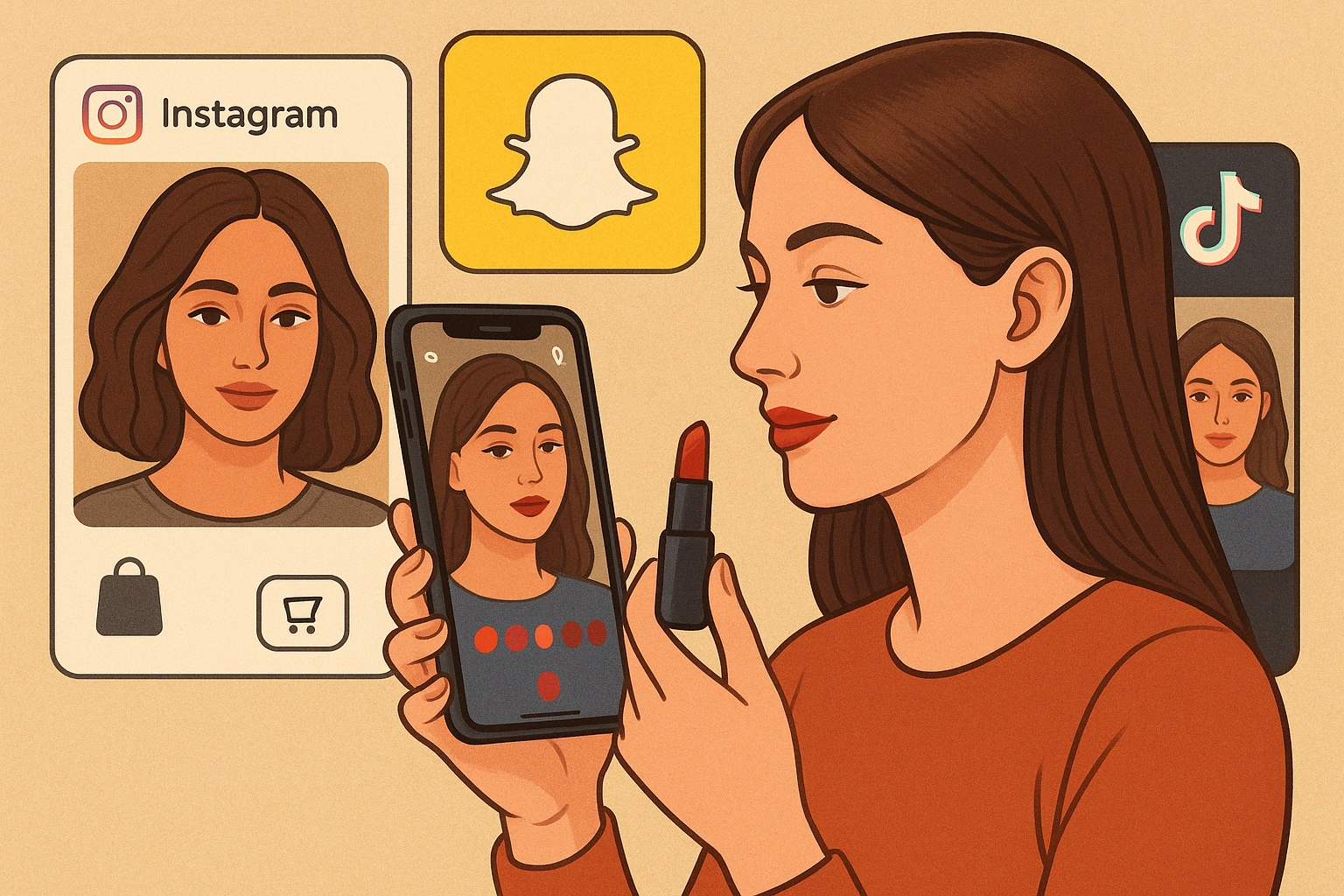
Discover how social AR marketing strategies on Instagram, Snapchat, and TikTok are transforming the way brands drive real sales. Learn how social AR marketing techniques, like interactive AR filters, engage users and boost conversions. In 2025, social AR marketing trends are shaping the future of e-commerce experiences. This guide shows how to apply social AR marketing effectively to create filters that captivate and convert audiences.
Introduction
What if your customers could try on your new lipstick from their couch, or see if your new sunglasses fit their face, all within Instagram? This isn’t just a fun gimmick; it’s a powerful sales tool. Welcome to the world of social AR marketing, where interactive filters are a key part of the e-commerce sales funnel. Social AR marketing allows brands to move beyond simple awareness and directly influence purchases. This guide explores social AR marketing techniques on platforms like Instagram and TikTok, helping you create AR try-ons and ads that truly convert. By mastering social AR marketing strategies, you can engage users in ways traditional ads simply cannot.
What Is Social AR Marketing?
Social AR marketing leverages augmented reality filters and effects on platforms like Instagram, Snapchat, and TikTok to showcase products and engage audiences. Unlike other AR approaches, social AR marketing experiences are native to the apps users already spend hours on. This form of Social AR marketing includes everything from branded face filters and interactive mini-games to immersive Snapchat AR shopping lenses that enable virtual try-ons and direct purchases. By using social AR marketing strategically, brands can create highly engaging experiences that turn casual viewers into loyal customers.
In 2025, the line between entertainment and commerce on these platforms has completely blurred. A report from Statista shows that social commerce is a multi-billion dollar industry, and AR is a key driver of that growth. The future trend is “shoppable AR”—filters that don’t just let you try a product, but also let you buy it with a single tap, creating a seamless path from discovery to purchase.
Why Social AR is a Direct Sales Driver
Moving AR to social platforms connects immersive experiences directly to the point of sale.
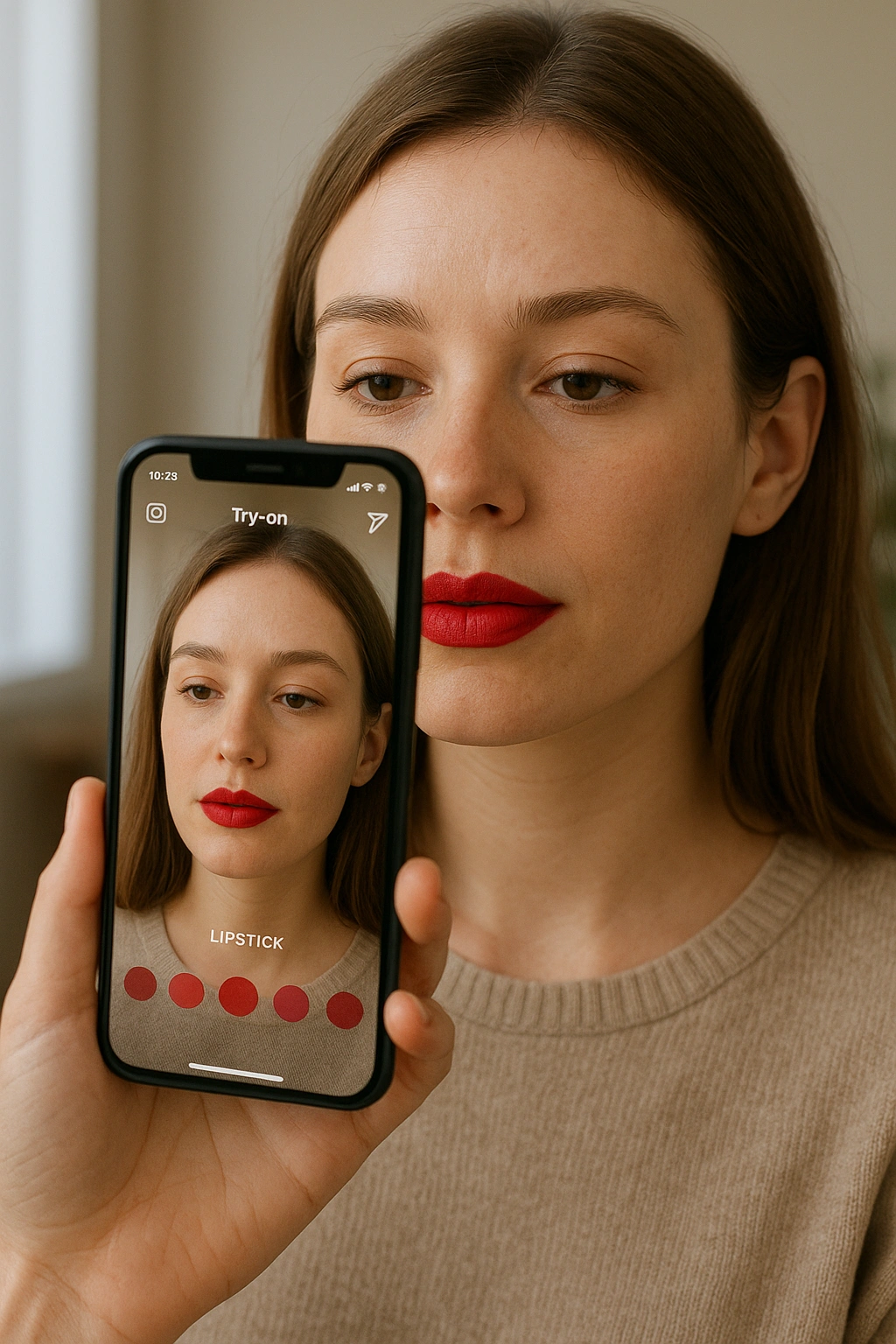
Enable Frictionless Virtual Try-On
Social AR removes the biggest barrier to online shopping for beauty and fashion: uncertainty. Users can instantly see how a product looks on them, increasing purchase confidence and reducing returns.
- Example: A cosmetics brand releases an **Instagram AR try-on** filter for their new collection of eyeshadows, with a “Shop Now” link directly in the filter.
- Benefit: According to Snap Inc., AR-guided shopping can lead to a 25% decrease in returns.
Reach Massive, Engaged Audiences
Instead of trying to drive traffic to your own app or website, you’re meeting customers where they already are. A successful AR filter can be shared and used millions of times, creating enormous organic reach.
- Example: A fashion brand creates a “What’s Your Style?” quiz filter on TikTok that goes viral, exposing their brand to a new generation of shoppers.
- Benefit: Taps into the native sharing behaviors of social platforms to generate brand awareness and drive traffic to your profile or store.
Create Data-Driven Product Insights
The analytics behind social AR filters can provide valuable data on which products and styles are most popular. This can inform future product development and marketing decisions.
- Example: A jewelry company sees that a virtual rose gold necklace is tried on 10x more than the silver version, influencing their next production run. This is a different application than using AR in retail stores, but both leverage user data.
- Benefit: Provides real-world consumer data that can reduce the risk of creating unpopular products.
How to Create a Social AR Campaign
Brands typically use the native AR creation tools provided by each social media platform.
- Choose Your Platform: Decide where your target audience is. Instagram is great for beauty and fashion, Snapchat for a younger demographic, and TikTok for viral trends and challenges.
- Use the Native AR Tool: Each platform has its own software:
- Meta’s Spark AR: For creating effects for Instagram and Facebook.
- Snap’s Lens Studio: For creating Snapchat Lenses.
- TikTok’s Effect House: For creating effects for TikTok videos.
- Develop the 3D Assets: Create or commission the 3D models of your products (e.g., the lipstick, the sunglasses).
- Build and Publish: Assemble the filter in the chosen platform’s software, add any interactive logic, and submit it for review.
- Promote the Filter: Once live, promote your new filter through influencer collaborations, paid **TikTok AR ads**, and by encouraging user-generated content.
Case Study: MAC Cosmetics on Snapchat
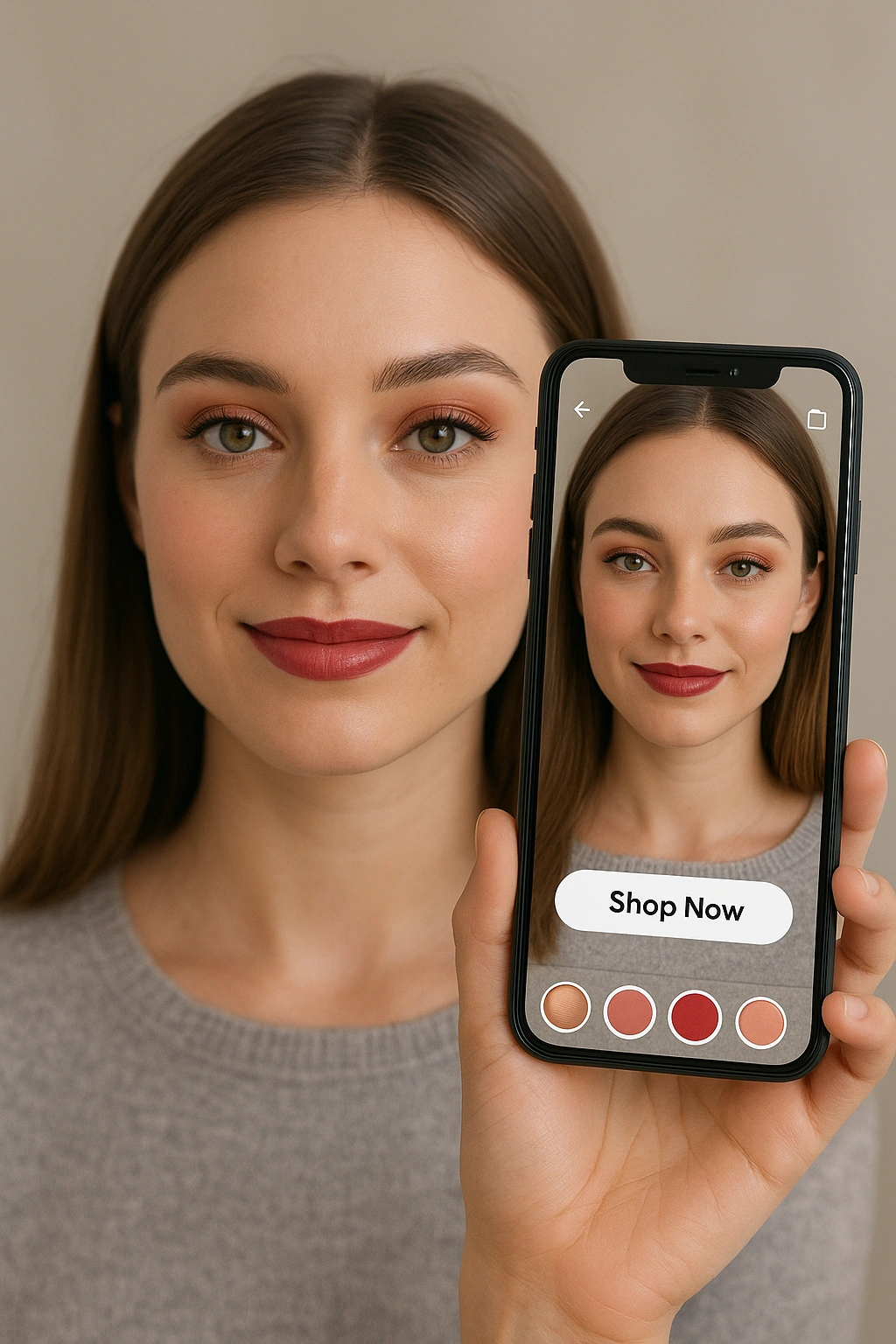
MAC Cosmetics has been a leader in **Snapchat AR shopping**. They’ve created numerous lenses that allow users to try on full makeup looks in real-time. But they take it a step further. Within the lens, there’s a “Shop” button. Tapping it brings up a menu with every product used in the virtual look, allowing the user to add them directly to their cart and check out without ever leaving the Snapchat app.
This is a masterclass in frictionless commerce. It closes the gap between inspiration and purchase to mere seconds. By making the experience fun (trying on a new look) and the path to purchase effortless, MAC turns a simple filter into a powerful sales channel.
Pros & Cons of MAC’s Approach
| Pros | Cons |
|---|---|
| ✅ Creates a seamless path from try-on to purchase | ❌ Relies on a single platform’s user base |
| ✅ Highly engaging and shareable experience | ❌ Requires high-quality, realistic 3D makeup assets |
| ✅ Taps into existing user behavior on Snapchat | ❌ Can be expensive to develop and promote |
Comparison of Social AR Platforms for Marketing
Each platform offers unique advantages for brands.
| Platform | Key Features | Pros | Cons | Best For |
|---|---|---|---|---|
| Reels, Stories, strong influencer network | Huge reach, strong for beauty/fashion | Shopping integration is less direct than Snapchat | Brands with a strong visual identity and influencer marketing strategy. | |
| Snapchat | Advanced Lens Studio, direct AR commerce tools | Pioneer in AR, highly engaged young audience | Smaller user base than Instagram | Brands wanting the most powerful and direct AR-to-commerce tools. |
| TikTok | Effect House, trend-driven viral potential | Massive potential for organic virality | AR tools are less mature than competitors | Brands looking to create fun, challenge-based campaigns that tap into trends. |
Common Mistakes to Avoid in Social AR
To ensure your filter gets used, avoid these mistakes:
- Making it an Ad: The best filters are fun or useful first, and branded second.
- Poor Performance: A filter that lags or tracks poorly will be abandoned instantly.
- No Clear Call-to-Action: If the goal is sales, the “Shop Now” link must be obvious.
- Ignoring Influencers: Seeding your filter with a few key influencers is the fastest way to get it seen.
- One and Done: The most successful brands release a steady stream of new filters to keep their audience engaged.
Expert Tips & Best Practices
Follow these tips from social media strategists:
- Create a Custom Icon: A compelling icon for your filter will encourage more people to tap on it.
- Run a Contest: Encourage user-generated content by offering a prize for the most creative video using your filter.
- Use Paid Ads to Boost Your Filter: All platforms now offer ad formats to promote your AR effects to a wider audience.
“Stop thinking about your TikTok AR ad as an ad. Think of it as a prop. You’re giving your audience a fun prop to use in their own content. If the prop is good, they’ll become your marketers for free.”
Frequently Asked Questions (FAQ)
Q: How much does it cost to create an Instagram AR filter?
A: Costs vary dramatically. A simple branded filter from a freelancer might cost a few hundred dollars, while a complex, interactive game or virtual try-on experience from an agency could cost tens of thousands.
Q: What is the best platform for social AR marketing?
A: It depends on your goal and audience. For the most advanced direct-to-commerce features, Snapchat is the leader. For the largest potential reach, especially in fashion and beauty, Instagram is often the best choice.
Q: How do I find my filter once it’s published?
A: On Instagram, your filters live in a dedicated tab on your profile. You can also share them via a direct link in your Stories, bio, or posts.
Conclusion
The future of e-commerce is social and immersive. **Social AR marketing** is no longer just about brand awareness; it’s a powerful, bottom-of-the-funnel tool that allows customers to try, experience, and buy your products within the platforms they love. By creating useful and entertaining experiences like **Instagram AR try-on** and **Snapchat AR shopping** lenses, brands can build a direct path from engagement to conversion. As you plan your marketing strategy for 2025, don’t just advertise on social media—become a part of the conversation. To see what’s next in tech, keep up with publications like WIRED.