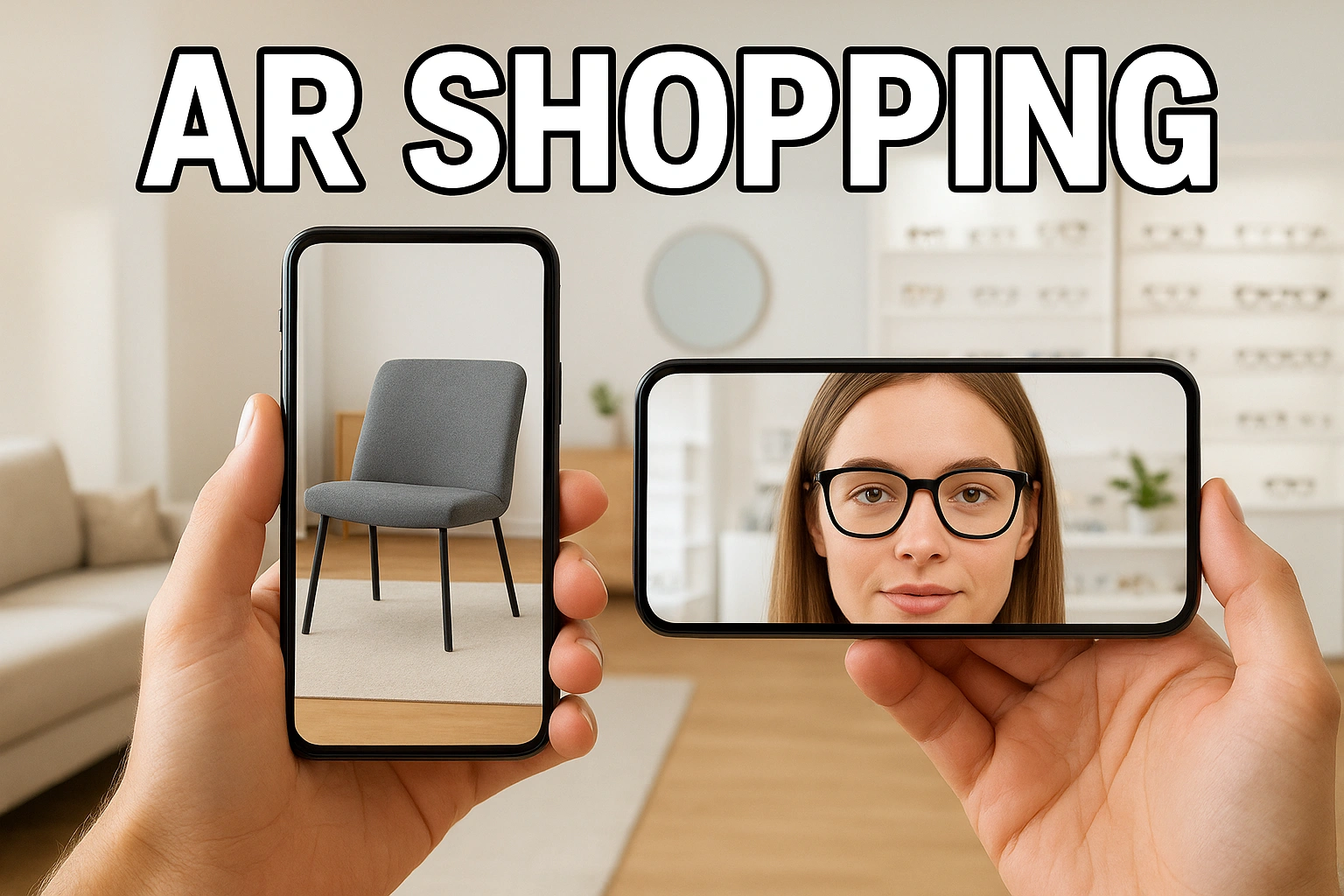
Discover how AR shopping is changing the way customers interact with products. AR shopping allows users to try items virtually and see realistic product demos. Our guide explores the top strategies in AR shopping for 2025, showing how augmented reality retail tools can boost sales. Whether through virtual try-on or immersive displays, AR shopping is becoming an essential part of modern e-commerce.
Introduction
Ever bought a piece of furniture only to find it doesn’t fit your space? Or ordered a pair of glasses that looked great online but not on your face? This “expectation vs. reality” gap is the biggest challenge in e-commerce. But what if you could bridge that gap? This is where **AR shopping** comes in. This guide dives into how augmented reality is revolutionizing retail with virtual try-ons and interactive product demos that actually drive sales. By the end, you’ll have a clear understanding of how to leverage **AR product visualization** to reduce returns and boost customer confidence.
What Is AR Shopping?
AR shopping, or augmented reality retail, is a technology that allows customers to overlay digital products onto their real-world environment using their smartphone or other smart device. Unlike virtual reality (VR), which creates a completely digital world, AR enhances the reality you already see. This can mean seeing how a new sofa looks in your living room, trying on a pair of sneakers virtually, or seeing how a shade of lipstick looks on your skin tone.
In 2025, this is no longer a gimmick; it’s a critical business tool. A report from Statista projects that the number of mobile AR users will surpass 1.7 billion this year. As consumers become more accustomed to interactive digital experiences, **augmented reality retail** is shifting from a novelty to an expectation. The future is WebAR—AR experiences that run directly in a mobile browser, eliminating the need for customers to download a separate app.
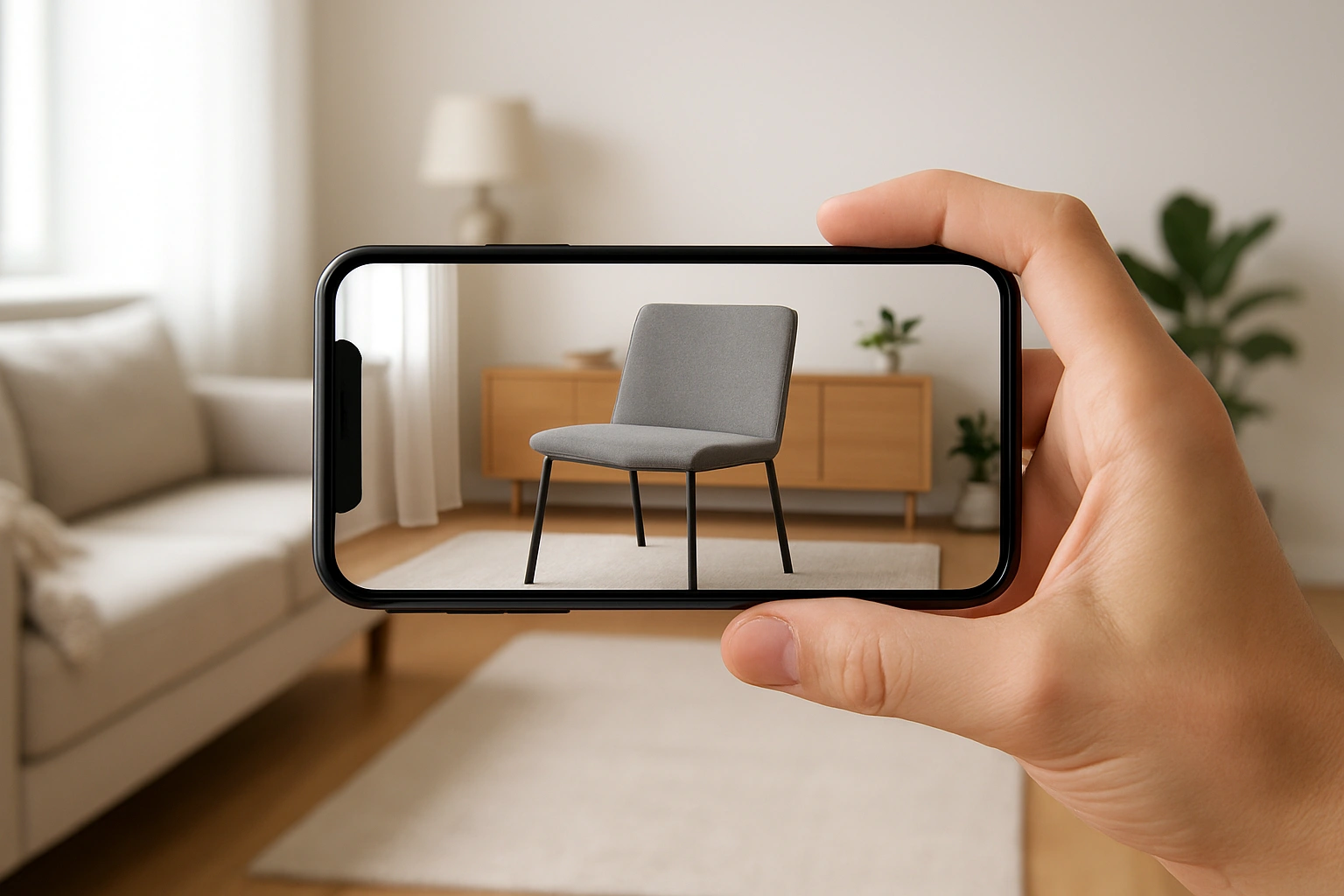
Why AR Shopping is a Conversion Machine
Integrating AR into your e-commerce strategy provides tangible benefits that directly impact your bottom line.
Skyrocket Buyer Confidence and Reduce Returns
The number one reason for online returns is a mismatch between expectation and reality. AR allows customers to verify size, scale, and style before they click “buy,” dramatically increasing their confidence in the purchase.
- Example: A customer uses **virtual try on** to see how a pair of sunglasses fits their face shape, confirming their choice.
- Benefit: Shopify data shows that products with AR content have a 94% higher conversion rate than those without.
Create Memorable and Shareable Brand Experiences
AR is inherently interactive and fun. It turns a passive browsing session into an active, engaging experience. This “wow” factor is highly shareable on social media, creating organic marketing opportunities.
- Example: A user places a virtual model of a new car in their driveway and shares a video of it on Instagram.
- Benefit: Increases brand engagement and user-generated content, expanding your marketing reach at no extra cost.
Bridge the Gap Between Digital and Physical Stores
AR brings the best part of in-store shopping—product interaction—to the convenience of e-commerce. It provides crucial information that static images and videos simply can’t convey.
- Example: A home renovator uses AR to see how a specific brand of faucet will look on their actual kitchen sink. This is a different application of immersive tech than, say, using it for special education, but both show the power of visualization.
- Benefit: Empowers customers to make better-informed decisions, leading to higher satisfaction and brand loyalty.
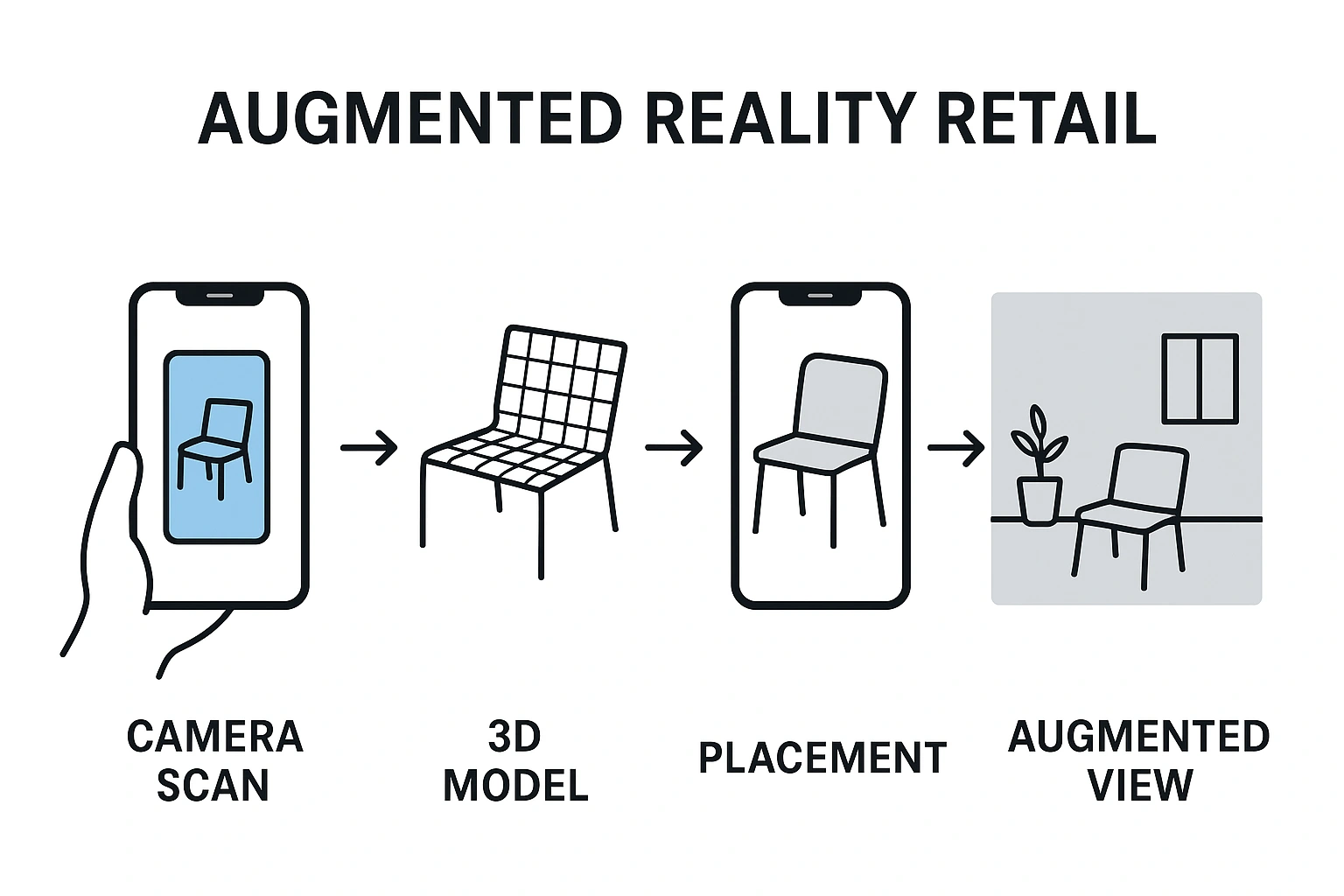
How Does AR Shopping Technology Work?
The technology behind AR shopping has become remarkably accessible, typically relying on the powerful cameras and sensors already in modern smartphones.
- Scene Recognition: Using the phone’s camera, the software identifies flat surfaces like floors or tables (plane detection) or a user’s face (face tracking).
- 3D Model Placement: A highly realistic 3D model of the product is retrieved from a server.
- Rendering and Scaling: The software “anchors” the 3D model to the recognized surface. It then renders the model in real-time, adjusting for lighting and scale to make it look like it’s naturally part of the environment. The user can then walk around it or manipulate it with their fingers.
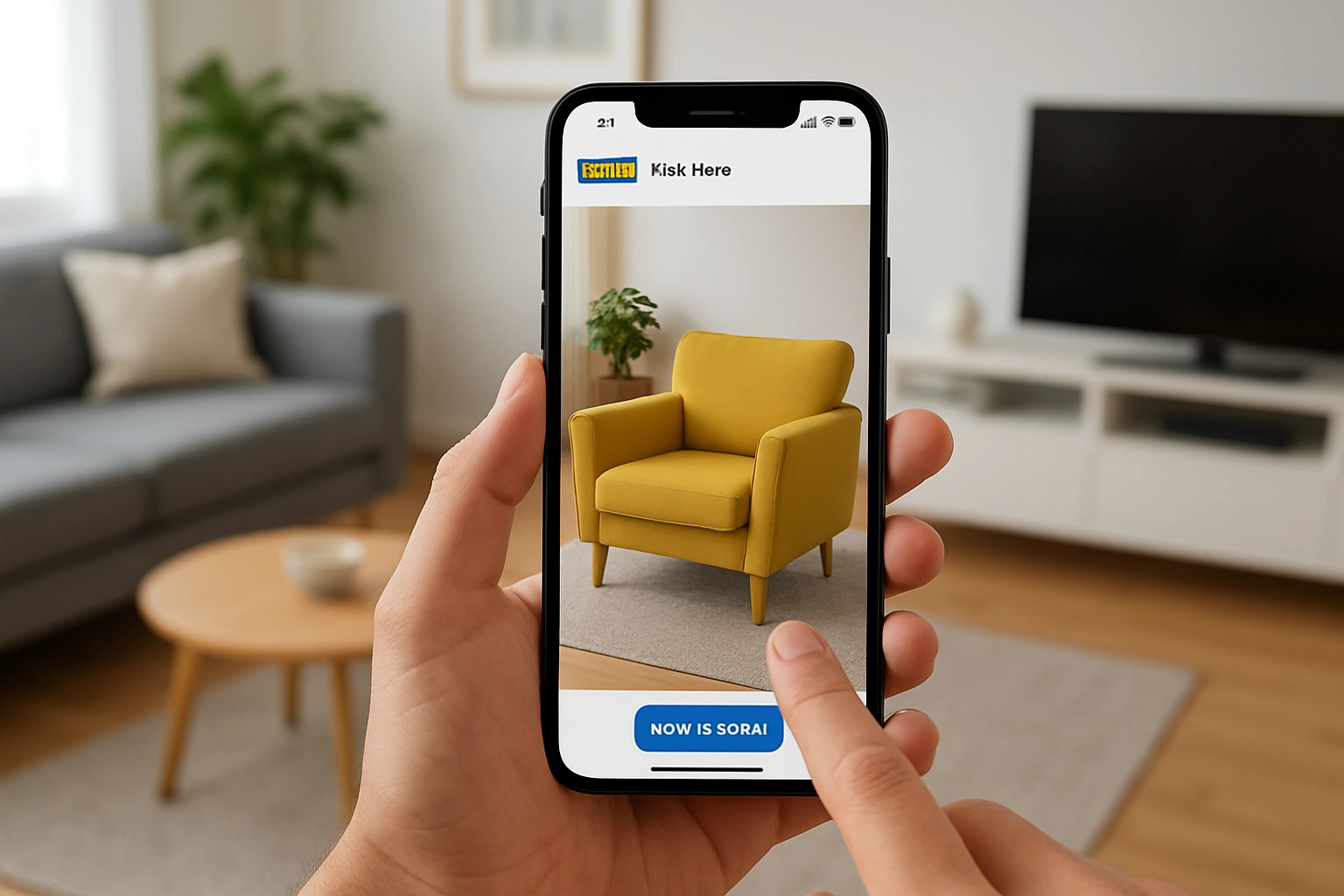
Product Spotlight: IKEA Place
The quintessential example of **AR product visualization** is **IKEA Place**. This app allows you to browse IKEA’s catalog and place true-to-scale 3D models of their furniture anywhere in your home.
I tested it by trying to find a new armchair for my reading corner. I selected a model, pointed my phone at the floor, and with a tap, the chair appeared. I could walk around it, look at the texture up close, and check if it blocked the doorway. It instantly answered the most important question: “Will this fit?” The experience was seamless and incredibly useful, turning an abstract measurement into a concrete visual confirmation.
Pros & Cons of IKEA Place
| Pros | Cons |
|---|---|
| ✅ True-to-scale models are highly accurate | ❌ Requires downloading a dedicated app |
| ✅ Simple and intuitive user interface | ❌ Lighting estimation can sometimes be inaccurate |
| ✅ Solves a genuine customer pain point | ❌ Limited to IKEA’s product catalog |
Comparison of AR Shopping Experiences (2025)
AR is being applied differently across various retail sectors.
| Platform/Brand | AR Type | Pros | Cons | Best For |
|---|---|---|---|---|
| IKEA Place | Product Visualization (Home) | Accurate scaling, solves a real problem | App-based | Customers buying large items like furniture and decor. |
| Sephora Virtual Artist | Virtual Try-On (Beauty) | Accurate color rendering, easy to compare products | Doesn’t replicate texture | Trying on makeup shades for products like lipstick and eyeshadow. |
| Warby Parker | Virtual Try-On (Eyewear) | Highly realistic fit and sizing | Requires an iPhone with a TrueDepth camera | Finding the right style and size of glasses for your face. |
Common Mistakes to Avoid in AR Shopping Implementation
To ensure your AR feature is a tool, not a toy, avoid these mistakes:
- Unrealistic 3D Models: If the product looks fake, it breaks trust and is useless for decision-making.
- A Clunky User Experience: The AR feature must be easy to find and launch in one or two taps.
- No Clear Call-to-Action: After visualizing a product, the “Add to Cart” button should be immediately accessible.
- Ignoring WebAR: Forcing users to download an app creates friction. A browser-based experience is more accessible.
- Poor Performance: The experience must load quickly and run smoothly on a range of devices.
Expert Tips & Best Practices
Follow these tips from e-commerce leaders:
- Invest in High-Quality 3D Assets: Your 3D models are your product. Their quality is non-negotiable.
- Integrate AR on the Product Page: Don’t hide the feature. Make the “View in Your Space” button prominent.
- Focus on Products That Benefit Most: Prioritize AR for items where size, scale, or fit are major customer questions.
“Augmented reality retail isn’t about the ‘wow’ factor anymore. It’s a conversion tool. The best implementations are the ones that are so useful, the customer almost forgets they’re using AR and just feels more confident in their purchase.”
Frequently Asked Questions (FAQ)
Q: What is the difference between AR and VR shopping?
A: AR shopping overlays digital items onto your real world through your phone. VR shopping involves putting on a headset and entering a completely virtual store.
Q: Do I need to download an app for every AR shopping experience?
A: Not anymore. Many brands are adopting WebAR, which allows AR experiences to run directly in your phone’s web browser, no app required.
Q: How much does it cost for a business to implement AR?
A: Costs have come down significantly. Platforms like Shopify now have built-in tools, and services for creating 3D models are becoming more affordable. It’s no longer just for giant retailers.
Conclusion
The line between digital and physical commerce is blurring, and **AR shopping** is the bridge. By giving customers the power to try before they buy, **augmented reality retail** solves the oldest problem in online shopping. It’s a powerful tool that builds confidence, reduces returns, and creates engaging experiences that drive conversions. As you consider your e-commerce strategy for 2025 and beyond, don’t think of AR as a futuristic novelty; think of it as an essential part of the modern customer journey. To see more on the future of tech, follow publications like WIRED.