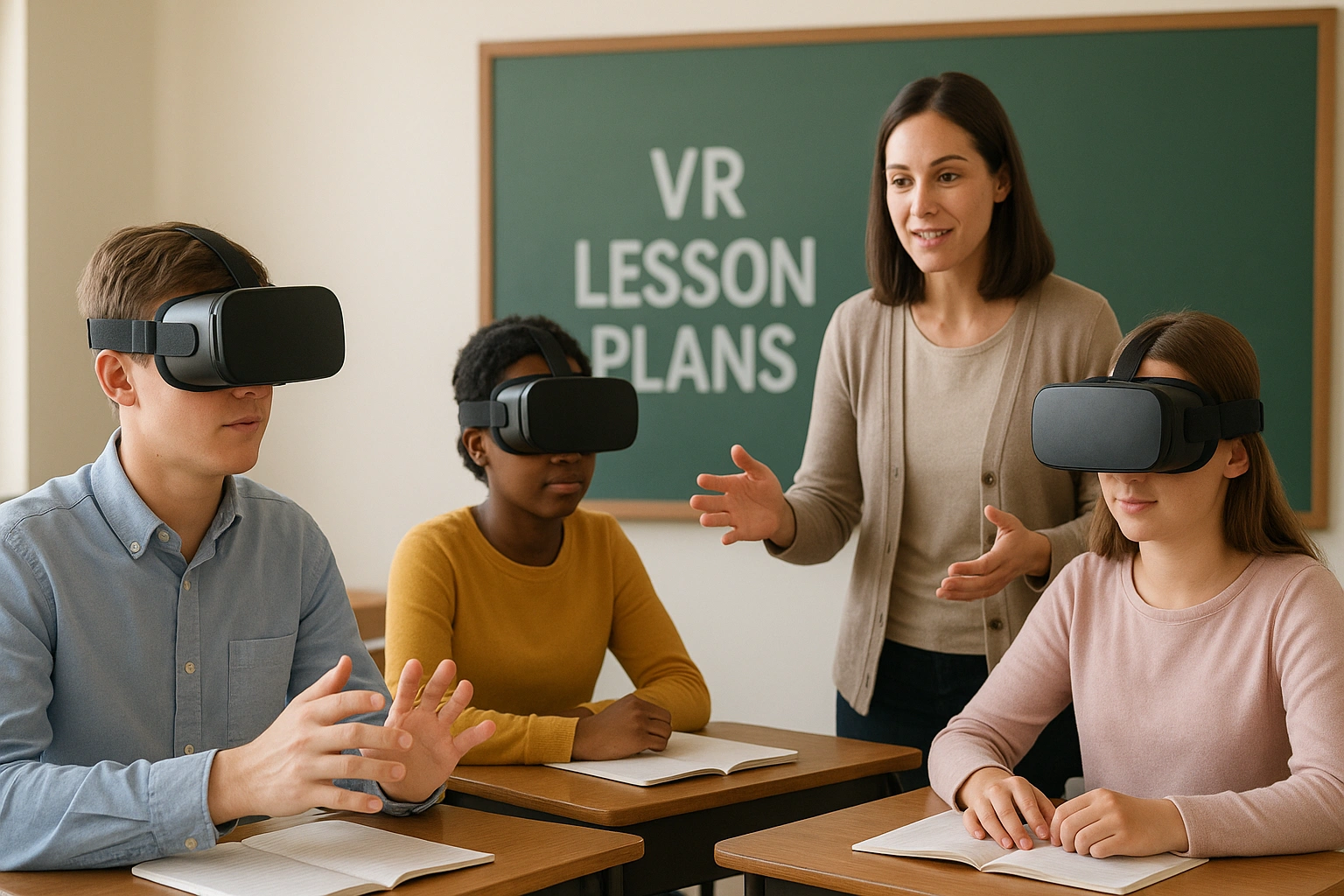
Learn to create effective, standards-aligned VR lesson plans quickly. Our guide introduces simple ways to design VR lesson plans that fit smoothly into the curriculum. You’ll also discover how VR lesson planning makes classroom activities more structured and engaging. By the end, you’ll have clear ideas to bring immersive lessons to life with practical VR lesson plans for your students.
Introduction
You have a classroom set of VR headsets, the students are excited, but you’re facing a familiar challenge: time. How do you move beyond one-off “wow” moments and integrate structured VR lesson plans into your curriculum in a meaningful, standards-aligned way without spending your entire weekend planning? This guide is for busy educators who want practical VR lesson plans that can be applied efficiently in class. We’ll provide a clear framework for building consistent VR lesson planning, share ready-to-use templates, and offer engaging VR classroom activities. By the end, you’ll see how VR lesson plans can transform immersive learning into a powerful, time-saving tool.
What Are Standards-Aligned VR Lesson Plans?
A VR lesson plan is a structured guide that integrates a specific virtual reality experience into a broader learning objective. Effective VR lesson plans are not just about putting on a headset; they are about purposefully connecting immersive experiences to clear academic standards (like Common Core or NGSS). Well-prepared VR lesson plans also include pre-VR activities to build context, the main VR experience itself, and post-VR activities to reinforce and assess learning. By using consistent VR lesson planning, teachers can ensure the technology becomes a meaningful part of instruction rather than just a novelty.
The importance of this structure is paramount. A study highlighted by Edutopia emphasizes that technology is most effective when it’s thoughtfully integrated into the curriculum. In 2025, as VR becomes more common, the focus is shifting from the novelty of the tech to pedagogical effectiveness. Well-designed **immersive lesson ideas** ensure that VR is a powerful instructional tool, not just a fun distraction.
Why a Solid Lesson Plan is Non-Negotiable
Jumping into VR without a plan can lead to chaotic and ineffective sessions. That’s why structured VR lesson plans are essential for success. With clear VR lesson planning, teachers can guide students through purposeful activities instead of random experiences. Strong VR lesson plans also help align the immersive session with academic goals, ensuring every minute is productive. Ultimately, thoughtful VR lesson plans transform virtual reality from a simple classroom add-on into a powerful learning tool.
Ensure Curricular Alignment
A lesson plan explicitly links the VR activity to required learning standards, justifying the use of the technology and ensuring it contributes to academic goals. Well-structured VR lesson plans make sure every session connects directly to what students need to learn. By relying on clear VR lesson planning, teachers can demonstrate how virtual experiences support curriculum requirements. Effective VR lesson plans also provide evidence for administrators that the technology adds real academic value. In practice, strong VR lesson plans turn immersive activities into meaningful learning opportunities.
- Example: A virtual tour of the Anne Frank House is tied to a Common Core standard for analyzing historical accounts.
- Benefit: Makes VR a core part of the curriculum, not just an “extra” activity, and provides clear justification for administrators.
Maximize Student Engagement and Focus
Pre- and post-VR activities provide context and purpose. Students know what to look for during the experience and are prepared to discuss and apply what they’ve learned afterward.
- Example: Before a VR science lab, students review safety procedures and form a hypothesis. Afterward, they analyze their virtual results.
- Benefit: Transforms passive viewing into active, inquiry-based learning and prevents students from getting lost or off-task.
Enable Meaningful Assessment
A good plan includes methods for assessing student understanding. This proves the effectiveness of the lesson and provides valuable data on student progress.
- Example: After a virtual trip to the coral reefs, students create a short presentation on the causes of coral bleaching they observed. This pairs well with having the right VR headsets for schools.
- Benefit: Moves beyond “Did you have fun?” to “What did you learn?” and demonstrates the academic value of VR.
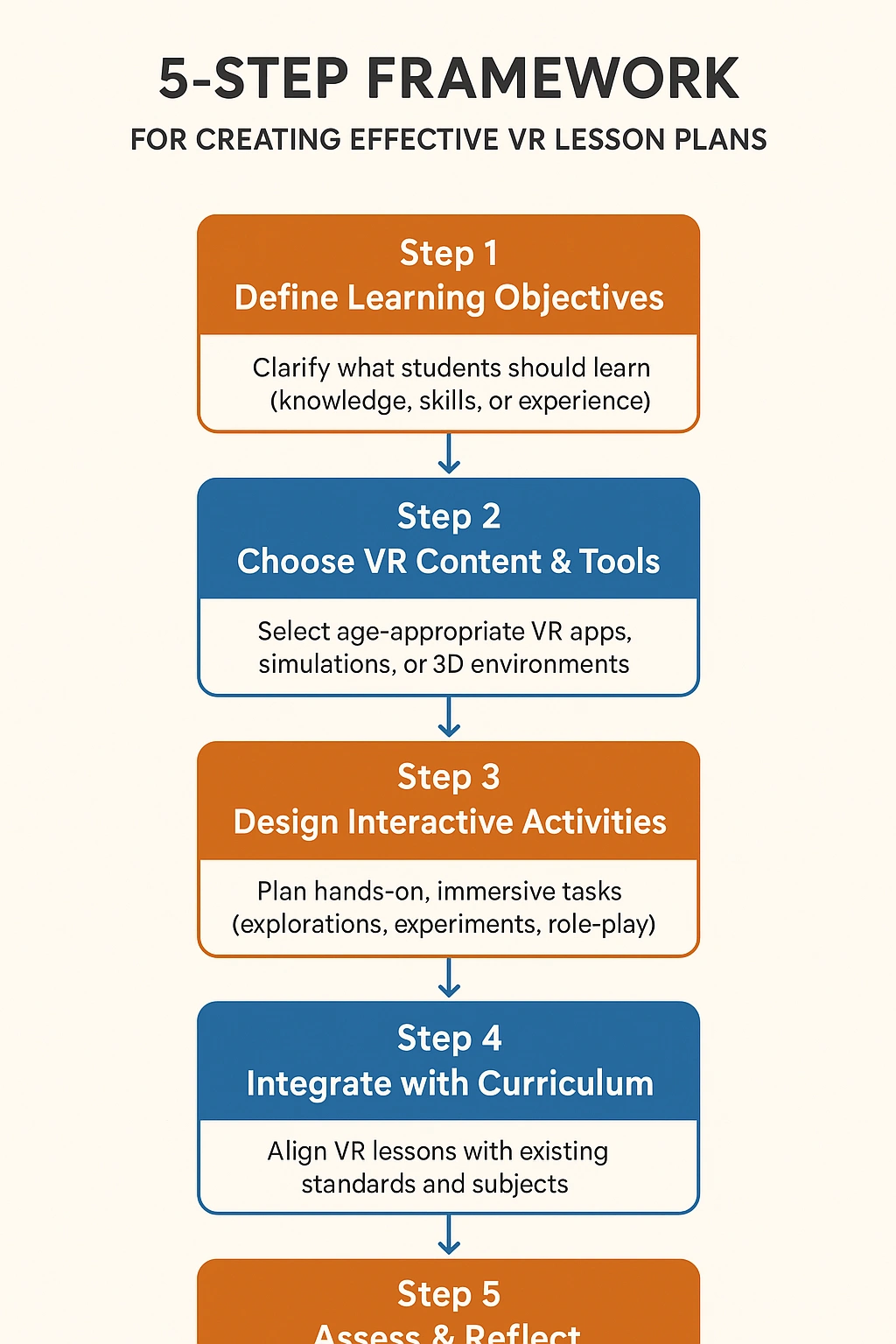
The 5-Step Framework for Fast VR Lesson Planning
You don’t need to start from scratch. Follow this efficient, repeatable framework to build your lessons.
- Start with the Standard: Identify the specific learning objective or standard you want to address. This is your anchor.
- Select the VR App: Choose a VR experience that directly aligns with your objective. Don’t pick an app and try to force it to fit.
- Design a 3-Part Structure (10-30-10):
- Before (10 mins): A quick “hook” activity. Introduce vocabulary, ask a guiding question, or make a prediction.
- During (15-20 mins): The VR experience itself. Provide a simple worksheet or observation guide to keep students focused.
- After (10 mins): A debrief and assessment. A quick pair-share, exit ticket, or group discussion.
- Create the Assessment: How will you know they learned it? This could be a simple quiz, a creative project, or a written reflection.
- Prepare for Logistics: Check that headsets are charged, the app is downloaded, and the physical space is safe.
A Lesson Plan from VictoryXR
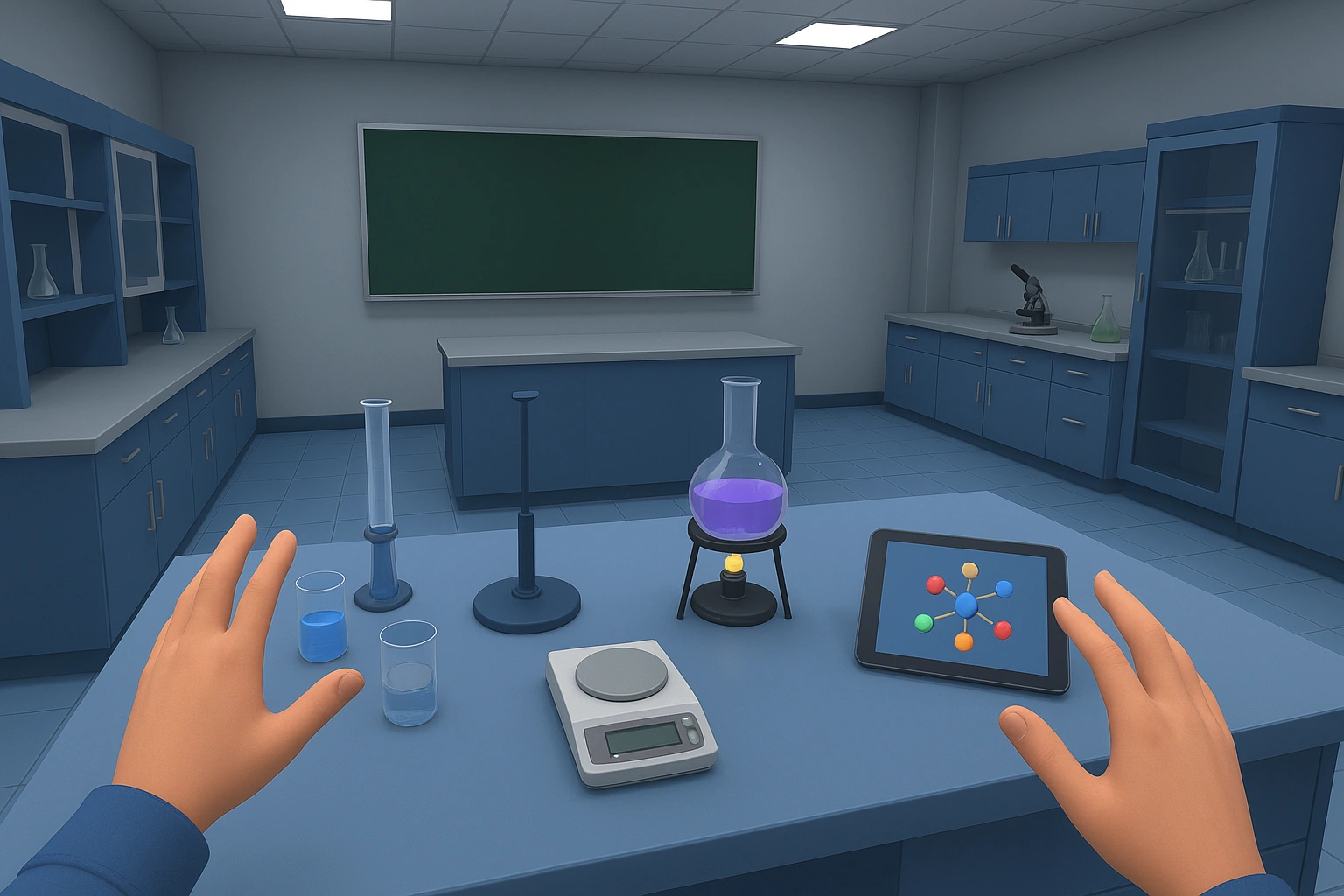
Let’s look at a pre-built lesson to see this framework in action. **VictoryXR** is a company that creates entire “digital twin” schools and standards-aligned science curricula. I reviewed their high school biology lesson on mitosis.
The lesson didn’t just drop students into a cell. It started with a pre-briefing from a virtual instructor. The VR experience itself was an interactive lab where students had to identify the stages of mitosis and answer questions to proceed. The post-lab assessment was a quiz automatically graded within the platform. It was a perfect example of a complete learning cycle, moving far beyond a simple 360-degree video.
Pros & Cons of Pre-Built Curricula
| Pros | Cons |
|---|---|
| ✅ Saves a massive amount of planning time | ❌ Can be expensive (often subscription-based) |
| ✅ Guaranteed to be standards-aligned | ❌ Less flexibility to customize for your specific students |
| ✅ Often includes built-in assessments and management | ❌ May not be available for all subjects or grade levels |
Comparison of VR Lesson Planning Approaches
There are several ways to approach VR curriculum planning, each with its own advantages.
| Approach | Description | Pros | Cons | Best For |
|---|---|---|---|---|
| DIY with Templates | Using a generic lesson plan template and finding free VR apps. | Most affordable, highly flexible | Time-consuming, requires vetting apps | Teachers comfortable with tech who want full control. |
| App-Specific Guides | Using the built-in lesson plans provided by apps like *Tilt Brush* or *Wander*. | Quick to implement, designed for the app | Vary in quality, limited to that app | Teachers who have a specific, high-quality app they want to use. |
| Full Curriculum Platforms | Subscribing to a service like VictoryXR or ClassVR that provides a library of lessons. | Easiest and fastest, comprehensive | Highest cost, less flexible | Schools or districts making a significant, long-term investment in VR. |
Common Mistakes to Avoid in VR Lesson Planning
Avoid these pitfalls to ensure your lessons are effective:
- The “Plan” is Just the App: Forgetting to plan the crucial before and after activities.
- No Clear Learning Objective: The lesson lacks focus and purpose.
- Making it Too Long: VR sessions should be short and targeted (15-20 minutes max).
- Lack of Student Guidance: Not giving students a clear task or question to focus on during the experience.
- Ignoring the Debrief: Skipping the post-VR discussion is a missed opportunity to solidify learning.
Expert Tips & Best Practices
Supercharge your VR classroom activities with these pro tips:
- Create a “VR Choice Board”: Offer students several pre-approved VR experiences related to a topic and let them choose.
- Use VR for Virtual Guest Speakers: Use apps like *Alcove VR* to bring in virtual experts from around the world.
- Incorporate a “Jigsaw” Activity: Have small groups explore different aspects of a VR environment and then teach what they learned to the rest of the class.
“The magic of a great VR lesson isn’t in the headset; it’s in the conversation that happens after the headset comes off. The plan is what makes that conversation possible.”
Frequently Asked Questions (FAQ)
Q: Where can I find free VR lesson plans?
A: Many VR app developers offer free educator guides and lesson plans on their websites. Additionally, online communities for educators, like those on X (formerly Twitter) or Facebook, are great places to find shared resources.
Q: How do I align a VR app with my state’s standards?
A: Start with the standard, not the app. Identify the key skills or knowledge required by the standard (e.g., “analyze,” “compare,” “identify”). Then, look for a VR experience that allows students to practice that specific skill.
Q: What’s the best way to assess learning from VR classroom activities?
A: Move beyond simple quizzes. Use performance-based assessments. Have students create something (a model in *Tilt Brush*), write a reflection, or solve a problem based on their VR experience.
Conclusion
Effectively using VR in the classroom requires more than just exciting technology; it requires thoughtful pedagogy. By adopting a structured framework for creating **VR lesson plans**, educators can transform virtual reality from a novelty into a powerful, standards-aligned teaching tool. Whether you’re building from scratch or using a pre-made curriculum, focusing on clear objectives and a complete learning cycle is the key to unlocking the true potential of immersive education. As you continue your journey, check out tech publications like WIRED for the latest in educational technology.