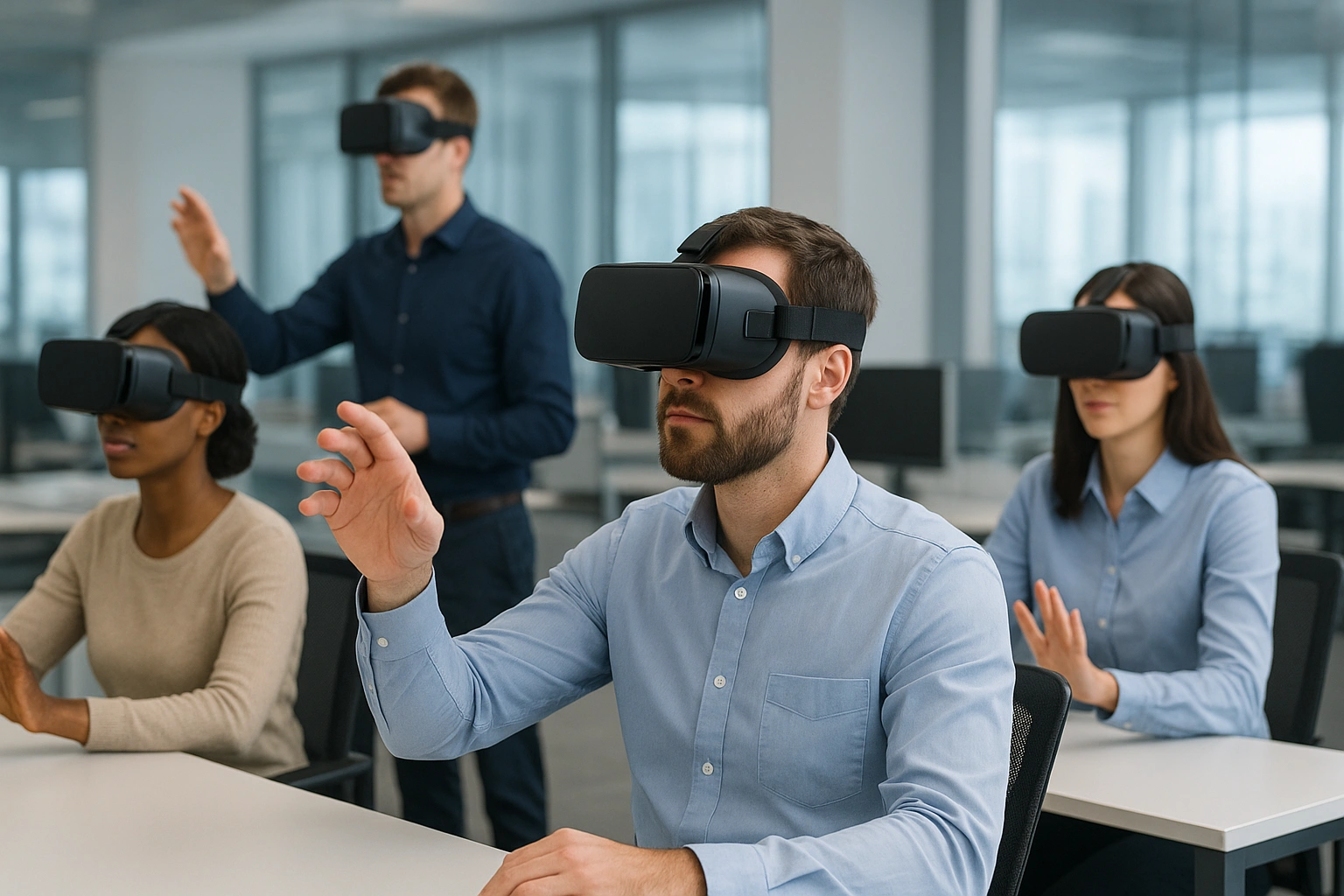
Discover the top VR training simulators for workforce upskilling in 2025 and see how VR training simulators are transforming modern workplaces. These VR training simulators provide safe, hands-on experiences that boost employee skills and confidence. By using VR training simulators, companies can enhance efficiency and reduce risks. Explore how enterprise VR training integrates these VR training simulators to create more effective learning and development programs.
Introduction
Did you know that companies can see up to a 4x improvement in training speed compared to traditional methods by using VR training simulators? In today’s fast-changing industries, the skills gap is widening, and conventional training struggles to keep up, which is why VR training simulators are becoming essential. This guide explores the world of VR training simulators, the cutting-edge solution for effective workforce upskilling. By integrating VR training simulators into enterprise programs, companies can build safer, more skilled, and highly efficient teams. After reading, you’ll understand how VR training simulators can revolutionize immersive job training and transform your company’s learning and development.
What Are VR Training Simulators?
VR training simulators are immersive software applications that replicate real-world work environments and scenarios. Using a VR headset, employees can practice complex tasks, operate heavy machinery, or handle hazardous situations in a completely safe, controlled virtual space. This form of **industrial VR learning** allows for hands-on training without real-world risks or costs.
The relevance of this technology in 2025 is undeniable. A report by PwC found that employees in VR were 275% more confident to act on what they learned after training. The future is moving towards creating “digital twins”—virtual replicas of entire factories or operating rooms—where teams can train collaboratively on complex procedures, driving unprecedented gains in productivity and safety.
Why VR Training Simulators Are a Business Imperative
Adopting VR for workforce training is more than an innovation—it’s a strategic advantage that delivers a measurable return on investment.
Drastically Enhance Workplace Safety
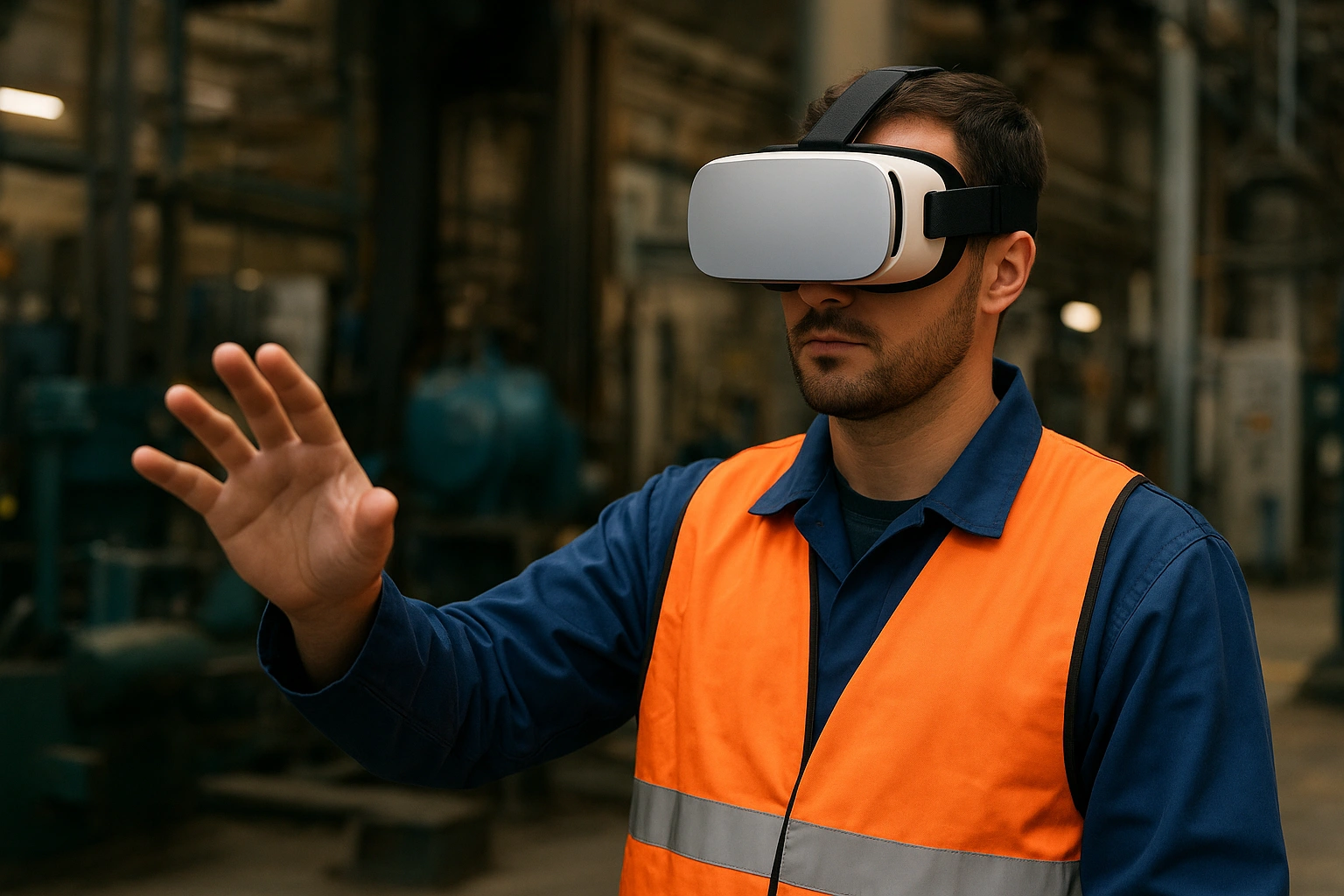
VR allows employees to practice high-risk tasks in a zero-risk environment. This is invaluable for industries like manufacturing, construction, and healthcare, where mistakes can have catastrophic consequences.
- Example: A new factory worker can learn to operate complex machinery and respond to emergency shutdowns without any physical danger.
- Benefit: Reduces workplace accidents, lowers insurance premiums, and builds a strong safety culture.
Significantly Reduce Training Costs
Traditional training often involves expensive travel, equipment downtime, and material waste. VR eliminates these costs by creating reusable, scalable virtual training modules.
- Example: Instead of flying 50 sales reps to a central location, a company can deploy a VR module to train them on a new product simultaneously.
- Benefit: Achieves ROI by cutting logistical expenses and minimizing operational disruptions.
Accelerate Skill Acquisition and Mastery
Immersive, hands-on learning in VR leads to faster and more effective skill development. Employees can practice and repeat modules until they achieve mastery, receiving instant feedback on their performance.
- Example: A retail employee can practice handling difficult customer conversations in a variety of scenarios. For more business insights, visit our main page.
- Benefit: Shortens the learning curve, improves employee performance, and increases confidence.
How Enterprise VR Training Works
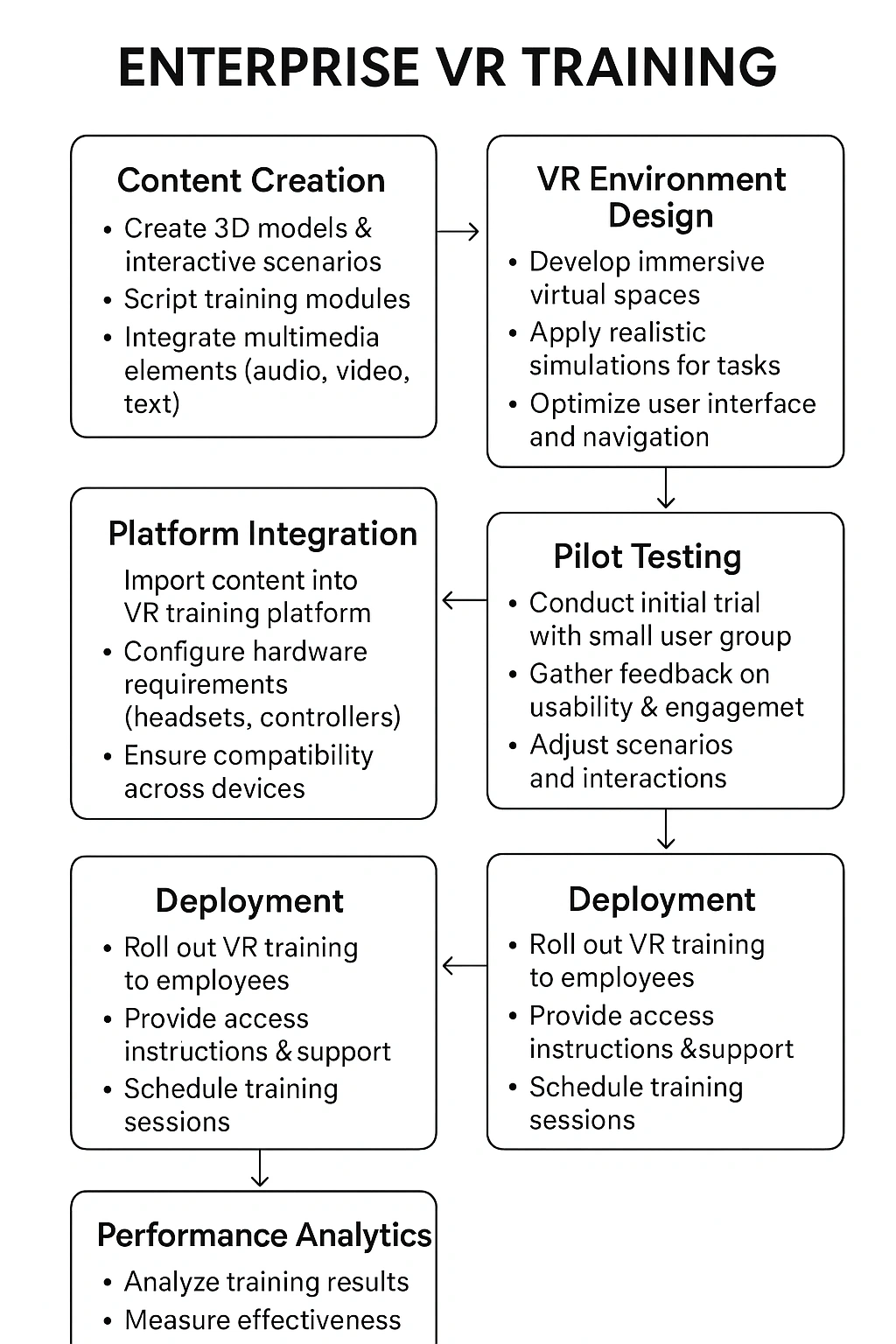
Deploying VR training across an organization involves a coordinated system of hardware, software, and data analytics.
- Content Creation: A company partners with a VR provider to create custom training modules that replicate their specific workflows and equipment.
- Hardware Deployment: Standalone VR headsets (like the Meta Quest for Business) are provisioned and sent to employees or training centers.
- Learning Management System (LMS) Integration: The VR platform connects to the company’s existing LMS to assign modules and track completions.
- Performance Analytics: As employees complete simulations, the platform captures detailed data on their performance, decision-making, and areas for improvement, which is then displayed on an admin dashboard.
Real-Life Use Case: A Look at Strivr’s Platform
To understand the corporate application, let’s look at **Strivr**, a leader in **enterprise VR training** used by companies like Walmart and Verizon. Strivr focuses on creating realistic simulations for operational efficiency and soft skills.
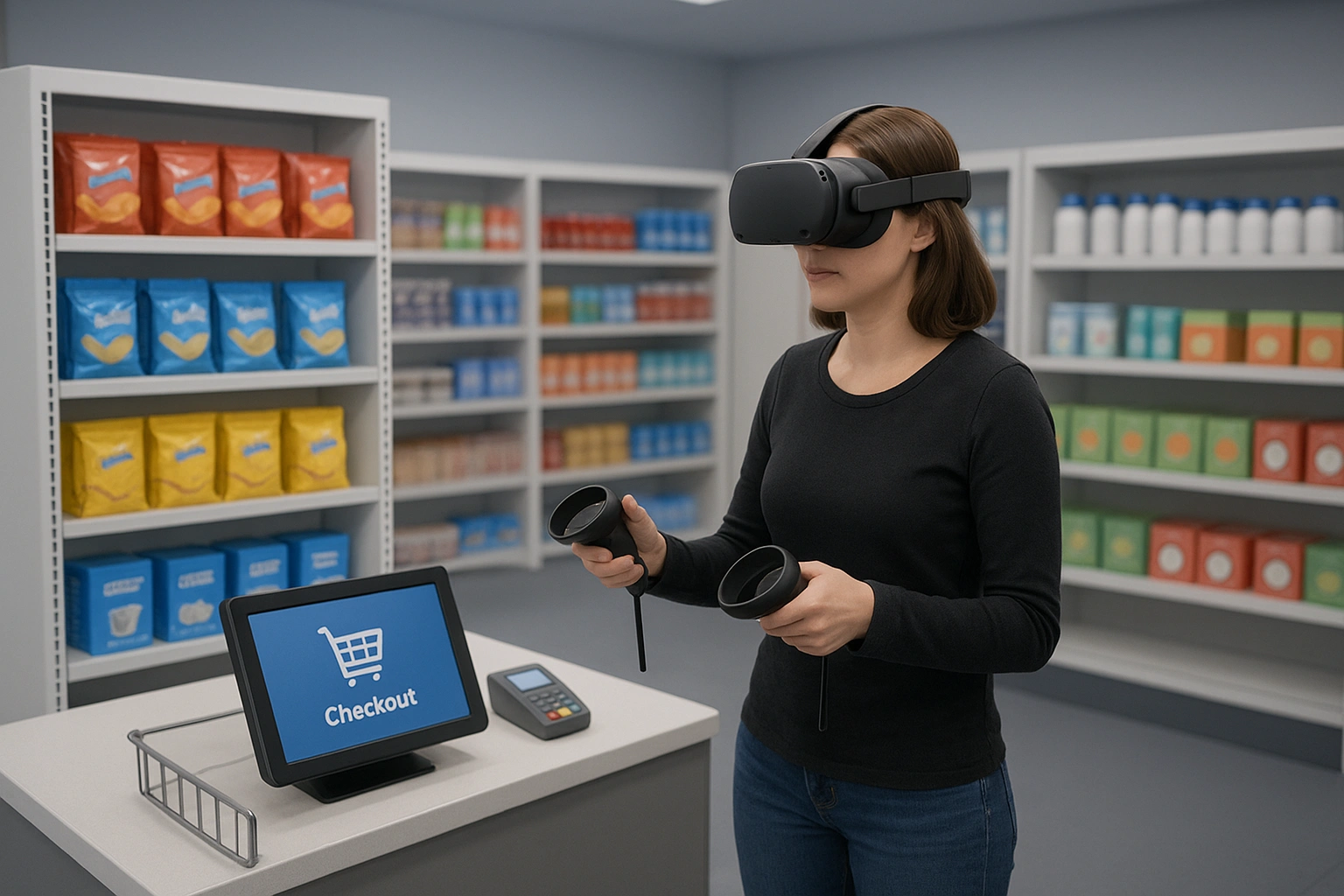
Imagine being a Walmart employee preparing for the chaos of Black Friday. Using Strivr, you can experience the rush in VR, practicing how to manage crowds, restock shelves under pressure, and handle customer issues—all before the actual event. The platform tracks where the employee is looking (attention tracking) and how they navigate the virtual store, providing managers with data on who is best prepared for the high-stress environment.
Pros & Cons Table
| Pros | Cons |
|---|---|
| ✅ Backed by extensive learning science research | ❌ Premium pricing, geared towards large enterprises |
| ✅ Advanced performance analytics and data insights | ❌ Requires significant investment in content creation |
| ✅ Proven success with Fortune 500 companies | ❌ Less suitable for small businesses with limited needs |
Comparison of Top VR Training Simulators in 2025
Here’s how some of the leading platforms for industrial VR learning stack up.
| Tool | Key Features | Pros | Cons | Best For |
|---|---|---|---|---|
| Strivr | Data-driven analytics, soft skills & operational training | Scientifically validated, scalable | High cost | Large enterprises focused on measurable performance improvement. |
| Virti | Healthcare simulations, AI-powered conversation practice | Specialized for medical, strong soft skills AI | Niche focus | Hospitals, medical schools, and corporate HR departments. |
| Talespin | “Co-pilot” AI characters, leadership & communication training | Realistic soft skills practice, off-the-shelf content library | Content may not be specific enough for some industries | Companies looking to develop leadership and soft skills. |
| Motive.io | Authoring platform for creating your own VR training | No-code, flexible, lower cost to start | Requires in-house effort to build content | Organizations with internal L&D teams who want to build custom content. |
Common Mistakes to Avoid in Enterprise VR Training
To ensure a successful rollout, avoid these common implementation pitfalls:
- No Clear ROI Goal: Failing to define what success looks like (e.g., “reduce safety incidents by 15%”).
- Treating it Like a Video: VR is interactive. Training should involve doing, not just watching.
- Poor Onboarding: Not properly introducing employees to the hardware and making them comfortable.
- Ignoring Analytics: Not using the rich performance data to provide feedback and refine training.
- Starting Too Big: Attempting a company-wide rollout without a successful pilot program first.
Expert Tips & Best Practices
Follow these tips to get the most out of your immersive job training program:
- Identify the Right Use Case: Start with a role or task that is high-risk, expensive to train for, or crucial for success.
- Find an Executive Champion: Get buy-in from leadership to secure budget and resources.
- Blend VR with Existing Training: Use VR as a powerful component of a broader learning program, not a total replacement.
- Focus on Psychological Safety: Emphasize that VR is a safe space to fail and learn without judgment.
“The most impactful industrial VR learning isn’t about replicating reality perfectly. It’s about isolating the critical skills and decisions, and letting employees practice them to mastery in a safe, repeatable way.”
Frequently Asked Questions (FAQ)
Q: What is the typical ROI for enterprise VR training?
A: While it varies, many companies report significant ROI through reduced accidents, lower training costs, and increased employee productivity. Some studies show VR training can be more cost-effective than traditional learning at scale.
Q: What hardware is needed for VR training simulators?
A: Most modern enterprise platforms use standalone headsets like the Meta Quest for Business or Pico Neo series, which don’t require an external computer and are easier to manage at scale.
Q: How long does it take to create a custom VR training module?
A: It can range from a few weeks for a simple scenario to several months for a highly complex simulation, depending on the level of detail and interactivity required.
Conclusion
The era of passive, one-size-fits-all corporate training is over. **VR training simulators** offer a powerful solution to the challenges of modern workforce development. By providing safe, engaging, and highly effective **immersive job training**, companies can close skills gaps, enhance safety, and unlock new levels of performance. Embracing **enterprise VR training** is no longer a choice for innovators; it’s a strategic necessity for any organization serious about building a future-ready workforce. For more on the intersection of technology and business, follow publications like WIRED.