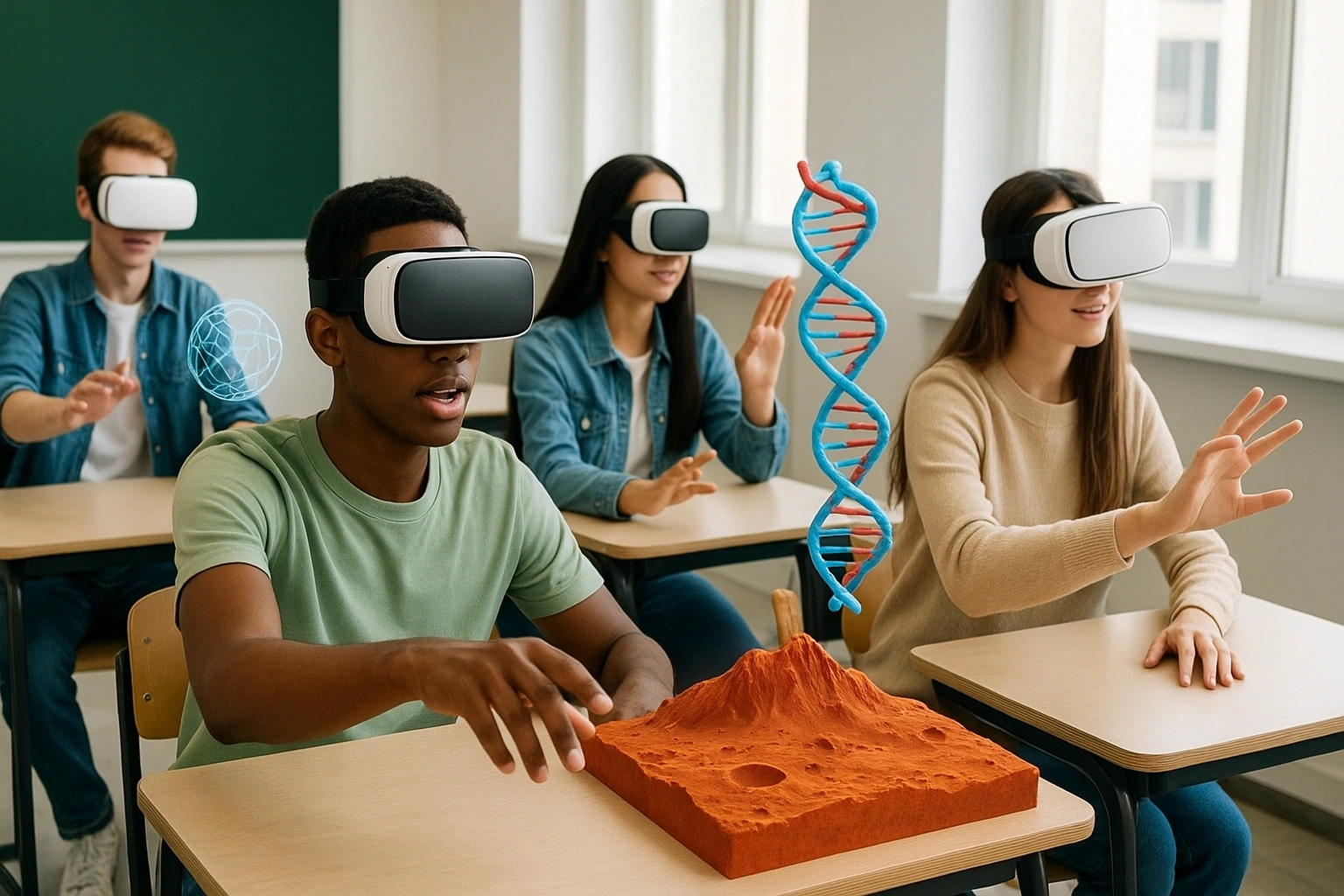
Explore the top VR education apps for 2025 with our guide on the best VR education apps available today. Discover how these best VR education apps can transform classrooms and enhance learning experiences. This overview highlights the leading VR learning tools and immersive classroom apps, showing why they are considered the best VR education apps for modern teaching.
Introduction
Imagine dissecting a frog without any mess, or walking on the surface of Mars during a science class. This isn’t science fiction; it’s the reality of modern classrooms using the best VR education apps. With the AR/VR in education market growing rapidly, passive learning is becoming a thing of the past. This guide explores the best VR education apps for 2025, showing how these VR learning tools can make lessons more interactive. By discovering the best VR education apps, educators gain powerful tools to create unforgettable learning experiences. After reading, you’ll understand which immersive classroom apps and best VR education apps are ideal for your students.
What Are VR Education Apps?
VR education apps are software applications that use virtual reality technology to create immersive learning experiences, making them some of the best VR education apps available today. By wearing a VR headset, students can step inside a 3D, interactive world, showing why these are considered the best VR education apps for visualizing complex topics. These best VR education apps allow learners to practice skills safely and explore places they could never visit in person. With such VR learning tools, abstract concepts become tangible, turning them into memorable experiences and proving the value of the best VR education apps in modern classrooms.
In 2025, the role of **AR VR in education** is more critical than ever. A report from Statista indicates that learning by doing (experiential learning) can increase retention rates up to 75%. VR directly facilitates this, moving beyond traditional lectures and textbooks. The future trend is toward collaborative, multi-user VR spaces where students can learn and solve problems together, no matter where they are physically located.
Why VR Education Apps Matter
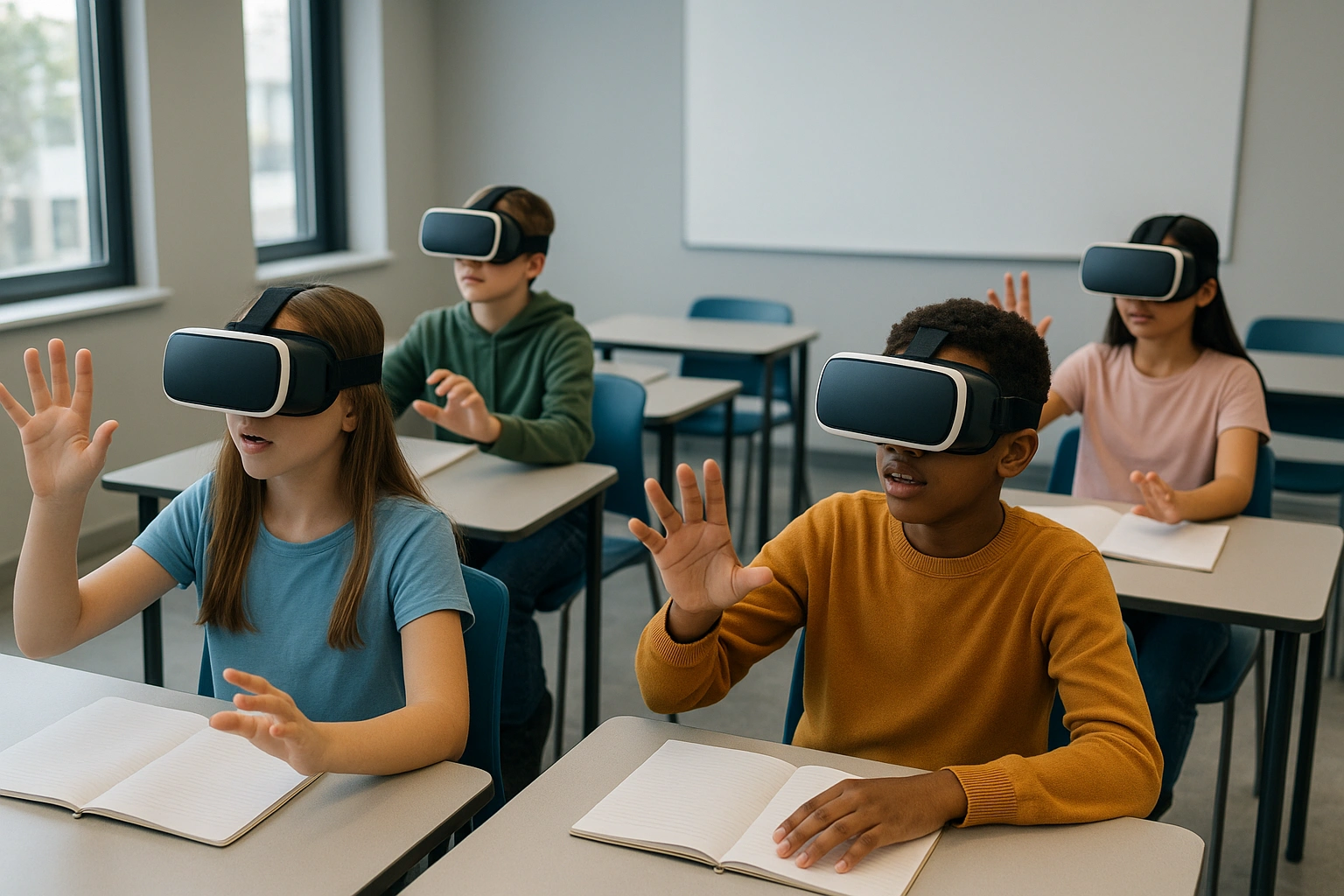
Integrating the best VR education apps into a curriculum offers benefits that go far beyond novelty. Using best VR education apps, teachers can engage students in ways traditional methods cannot. These best VR education apps provide interactive experiences that make learning more memorable. By selecting the right best VR education apps, educators can transform ordinary lessons into immersive and effective learning journeys.
Boost Engagement and Knowledge Retention
VR captures students’ attention in a way that traditional methods cannot. By fully immersing them in the subject matter, these apps make learning an active, exciting process, which dramatically improves focus and memory.
- Example: A history lesson becomes a virtual tour of ancient Rome, where students can walk through the Colosseum.
- Benefit: Turns passive listeners into active participants, leading to deeper understanding and better recall.
Simplify Complex and Abstract Concepts
Subjects like molecular biology, physics, or advanced mathematics involve concepts that are difficult to visualize. VR learning tools allow students to see and interact with these concepts in 3D.
- Example: Students can manipulate a 3D model of a DNA helix or visualize the forces acting on a planetary body.
- Benefit: Makes the invisible visible, providing clarity and fostering “aha!” moments of understanding.
Enable Safe and Repeatable Skills Training
For vocational training or complex scientific procedures, VR offers a risk-free environment to practice. Students can perform virtual chemistry experiments or practice medical procedures without the danger or cost of real-world mistakes.
- Example: A medical student can practice a surgical procedure dozens of times before entering an operating room. For more insights, you can visit our main page.
- Benefit: Builds confidence and competence through hands-on practice in a controlled setting.
How VR Education Apps Work
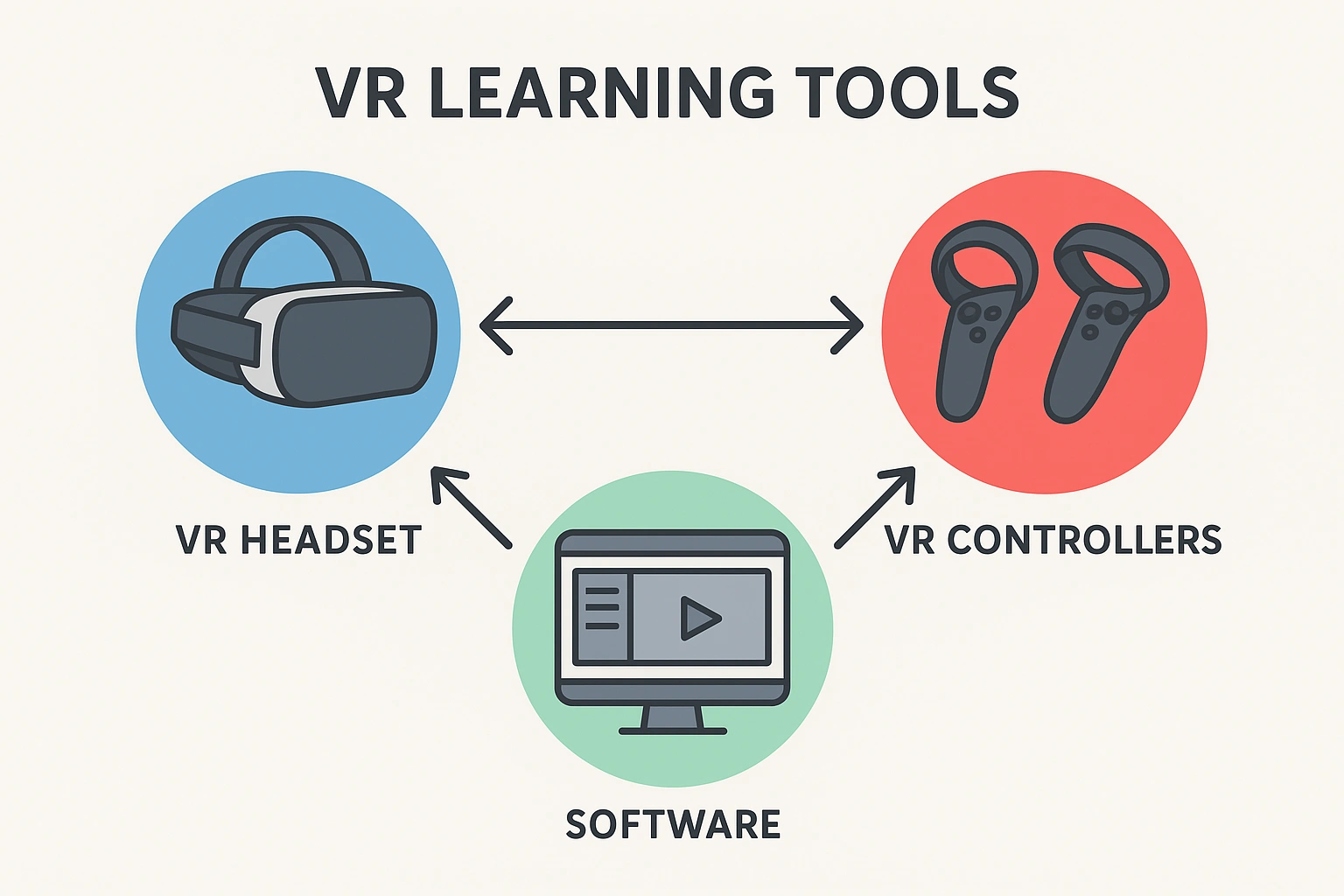
The magic of VR in the classroom relies on a few key components working together to create an immersive experience.
- VR Headset: This is the primary piece of hardware. It contains lenses and a screen that displays a stereoscopic 3D image, tricking the brain into perceiving depth.
- Motion Tracking: Sensors in the headset and controllers track the user’s head and hand movements, allowing them to look around and interact with the virtual environment naturally.
- VR Application: The educational software runs on a connected computer or directly on a standalone headset. This app generates the virtual world and the interactive elements within it.
- Haptic Feedback (Optional): Some advanced systems include controllers that vibrate or provide resistance, adding a sense of touch to the experience.
Real-Life Use Case: A Review of Google Arts & Culture VR
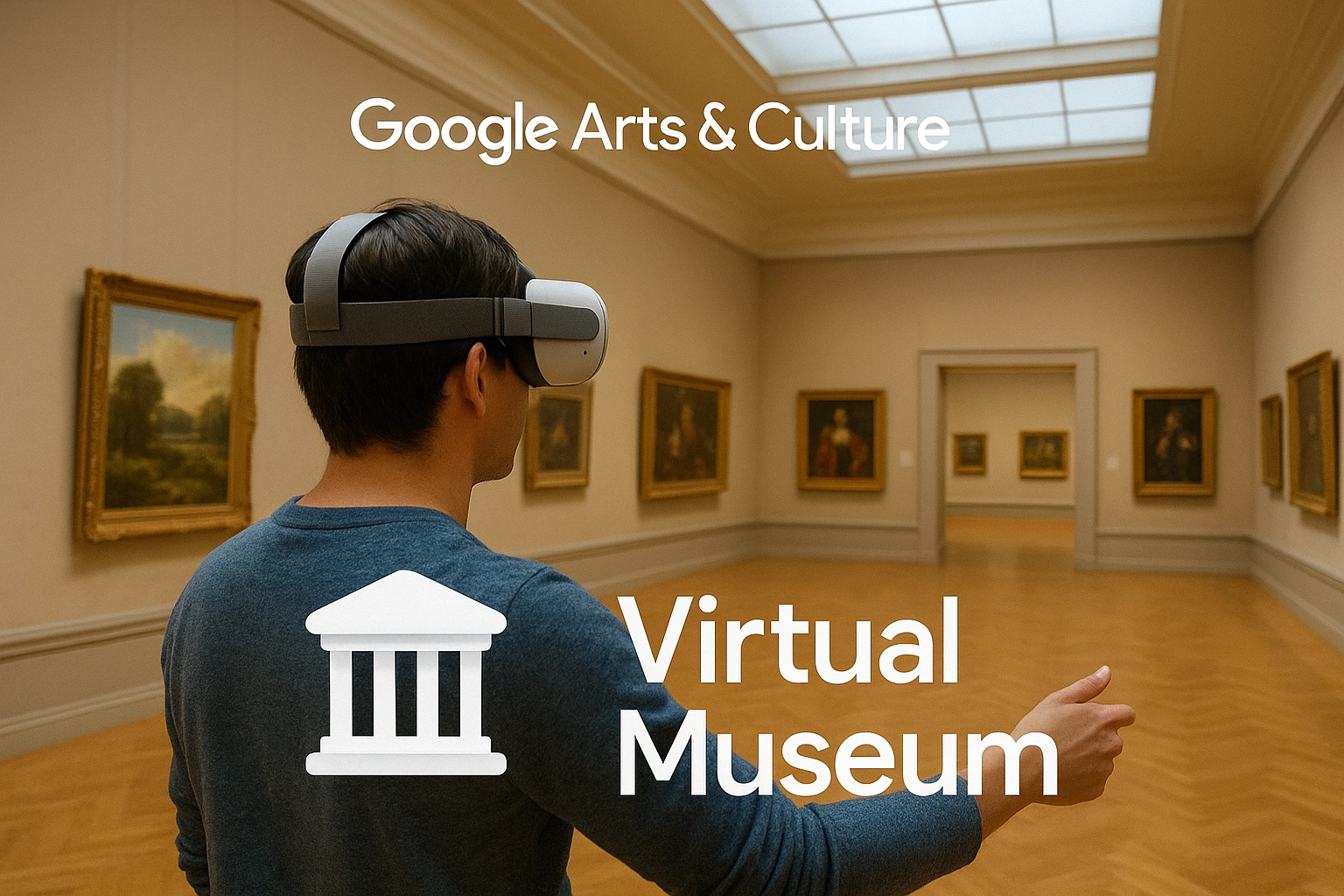
To see these tools in action, I spent an afternoon with Google Arts & Culture VR. This app is less of a structured lesson and more of a virtual museum. I was instantly transported to world-renowned galleries, able to get nose-to-canvas with Van Gogh’s “Starry Night” and examine ancient artifacts as if they were right in front of me. The app allows you to zoom in on details invisible to the naked eye and listen to audio guides for each piece.
The experience was breathtaking. For an art or history class, this is a game-changer. It breaks down the physical and financial barriers that prevent most students from ever visiting these cultural landmarks. It’s a powerful demonstration of how VR can democratize access to knowledge.
Pros & Cons Table
| Pros | Cons |
|---|---|
| ✅ Incredibly high-quality visuals | ❌ Limited interactivity beyond viewing |
| ✅ Access to thousands of artworks and artifacts | ❌ Requires a relatively powerful PC for some VR headsets |
| ✅ Completely free to use | ❌ Navigation can feel a bit clunky at times |
Comparison of the Best VR Education Apps in 2025
Here’s a look at some of the top VR learning tools for different subjects and age groups.
| Tool | Key Features | Pros | Cons | Best For |
|---|---|---|---|---|
| Google Arts & Culture VR | Virtual museum tours, artwork examination, guided audio | Free, vast content library, stunning visuals | Low interactivity | Art, history, and culture classes. |
| Unimersiv | Virtual field trips (Ancient Rome, anatomy), multi-subject content | Diverse topics, guided experiences | Subscription-based, content depth varies | General K-12 education across multiple subjects. |
| Tilt Brush by Google | 3D painting and sculpting in a virtual space | Fosters creativity, intuitive controls | More of a tool than a structured app | Art and design classes, creative projects. |
| Labster | Realistic virtual science lab simulations | Safe experiments, curriculum-aligned | Expensive, focused solely on science | High school and university science departments. |
Common Mistakes to Avoid When Using VR in the Classroom
To ensure a successful implementation, steer clear of these common errors:
- Using VR as a Gimmick: The experience must have clear learning objectives, not just be “cool.”
- Ignoring Student Comfort: Keep sessions short (15-20 minutes) to avoid motion sickness and eye strain.
- Lack of Curriculum Integration: The VR activity should supplement and reinforce the existing lesson plan.
- Choosing the Wrong Hardware: Don’t invest in expensive PC-based VR if simpler standalone headsets will suffice.
- Insufficient Teacher Training: Educators need to be comfortable with the technology before they can use it effectively.
Expert Tips & Best Practices
Follow these tips to maximize the impact of VR in your classroom:
- Set the Stage: Briefly explain what students will see and do in VR before they put on the headsets.
- Pair Up Students: Have one student in VR while a partner guides them or takes notes from the main screen.
- Facilitate a Debrief: After the VR experience, lead a class discussion to connect it back to the learning goals.
- Start Small: Begin with one or two apps and a small group of students before expanding.
“The goal of AR VR in education isn’t to replace the teacher; it’s to give them superpowers. It allows them to take students to places and show them things that were previously impossible.”
Frequently Asked Questions (FAQ)
Q: Is VR in education expensive to set up?
A: It can be, but costs are decreasing. Standalone headsets like the Meta Quest offer an affordable, all-in-one solution without needing a powerful computer, making it more accessible for schools.
Q: What are the main challenges of using VR learning tools?
A: Key challenges include the cost of hardware, the need for teacher training, potential for student motion sickness, and finding high-quality, curriculum-aligned content.
Q: Can VR be used for students with disabilities?
A: Yes, it has huge potential. VR can provide tailored experiences for students with physical disabilities, allowing them to participate in activities that might otherwise be inaccessible.
Q: What is the difference between AR and VR in education?
A: VR creates a fully immersive, completely digital environment. AR (Augmented Reality) overlays digital information onto the real world (like seeing a 3D model of a heart on your classroom desk through a phone).
Conclusion
Virtual reality is no longer a futuristic dream; it’s a practical and powerful educational tool for today’s classrooms. The **best VR education apps** break down the four walls of the school, fostering curiosity, deepening understanding, and creating a genuine love for learning. By embracing these **immersive classroom apps**, educators can prepare students for the future in a way that is both effective and incredibly exciting. To stay updated on technology trends, keep an eye on publications like WIRED.